
Service
Panel Replacement for Hamilton-Area Garage Doors
Single-panel garage door repair in Hamilton, OH is harder than it looks on 1960s-70s stock. See why matching panels fails here and what actually gets fixed.
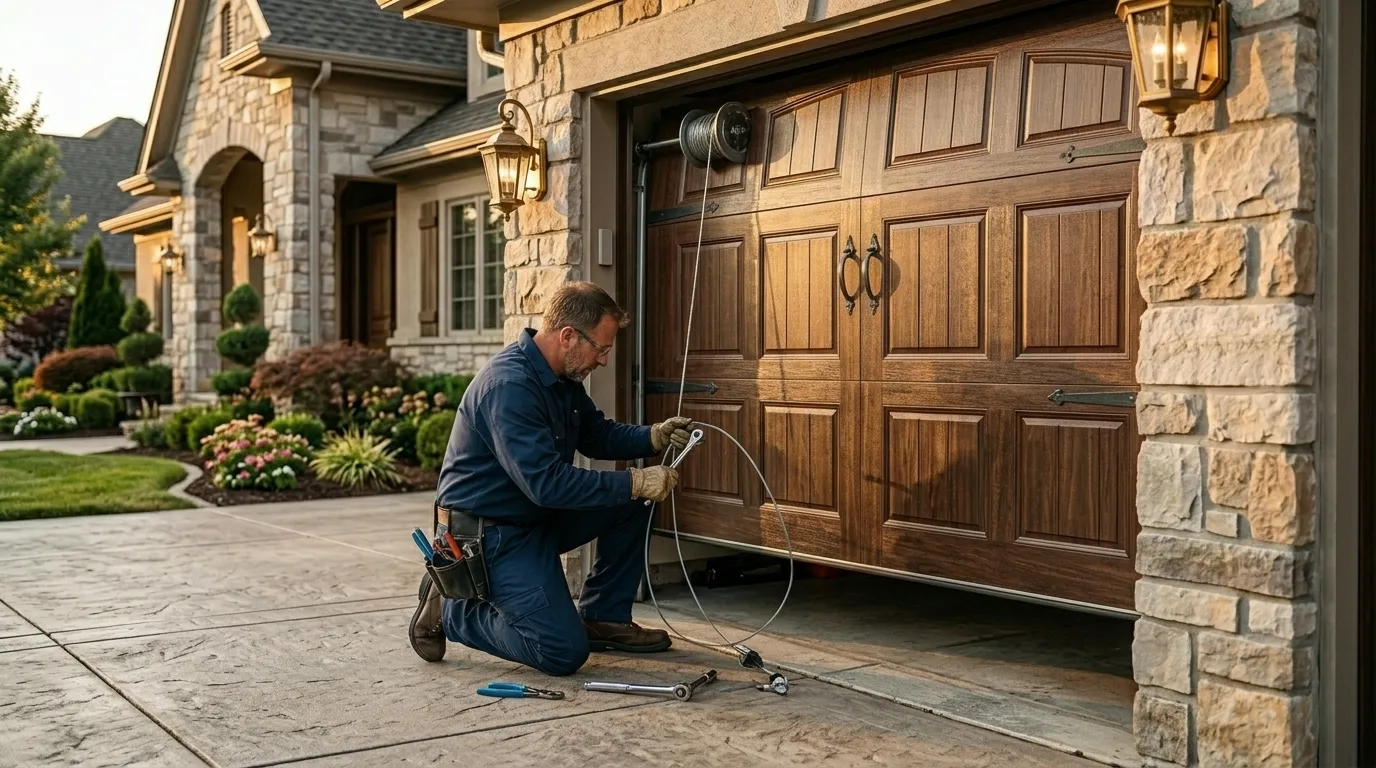
What Happens When You Call
-
1
Call or Request a Quote
Tell us what the door is doing and roughly how old the house is - that alone points us toward the likely part before a truck leaves.
-
2
On-Site Diagnosis
A tech checks the spring, cables, tracks, and opener in person and tells you plainly what is actually wrong.
-
3
Straight Price, No Surprises
You get a number before any work starts. It covers parts and labor, nothing added after the fact.
-
4
Fixed the Same Visit
Most repairs are done in one trip. If a part needs sourcing, we tell you that upfront instead of guessing.
Where This Job Goes Sideways
Most of the doors we get called on to fix a single dented or rusted panel come from homes built between 1938 and 2004, with a heavy concentration in the 1960s and 70s across the 55 named communities we work in around Hamilton. Those older sections were stamped in widths, heights, and rib patterns that steel door makers don't run anymore. You send us a photo of one bent panel expecting a quick swap, and we can usually get the color close, but the actual panel profile - seam depth, rib spacing, the way it keys into the track roller bracket - often isn't manufactured any longer.
That's when a simple panel job turns into a full-door conversation, and it's not because we're trying to upsell you. We don't keep every discontinued panel profile on the truck, and when the match isn't there, ordering one panel from a supplier can take longer and cost more than just replacing the door. Across the roughly 208,045 households and 101,416 owner-occupied houses in this service area, this is the single most common reason a 'quick panel fix' call turns into something bigger once we're standing in front of the door.
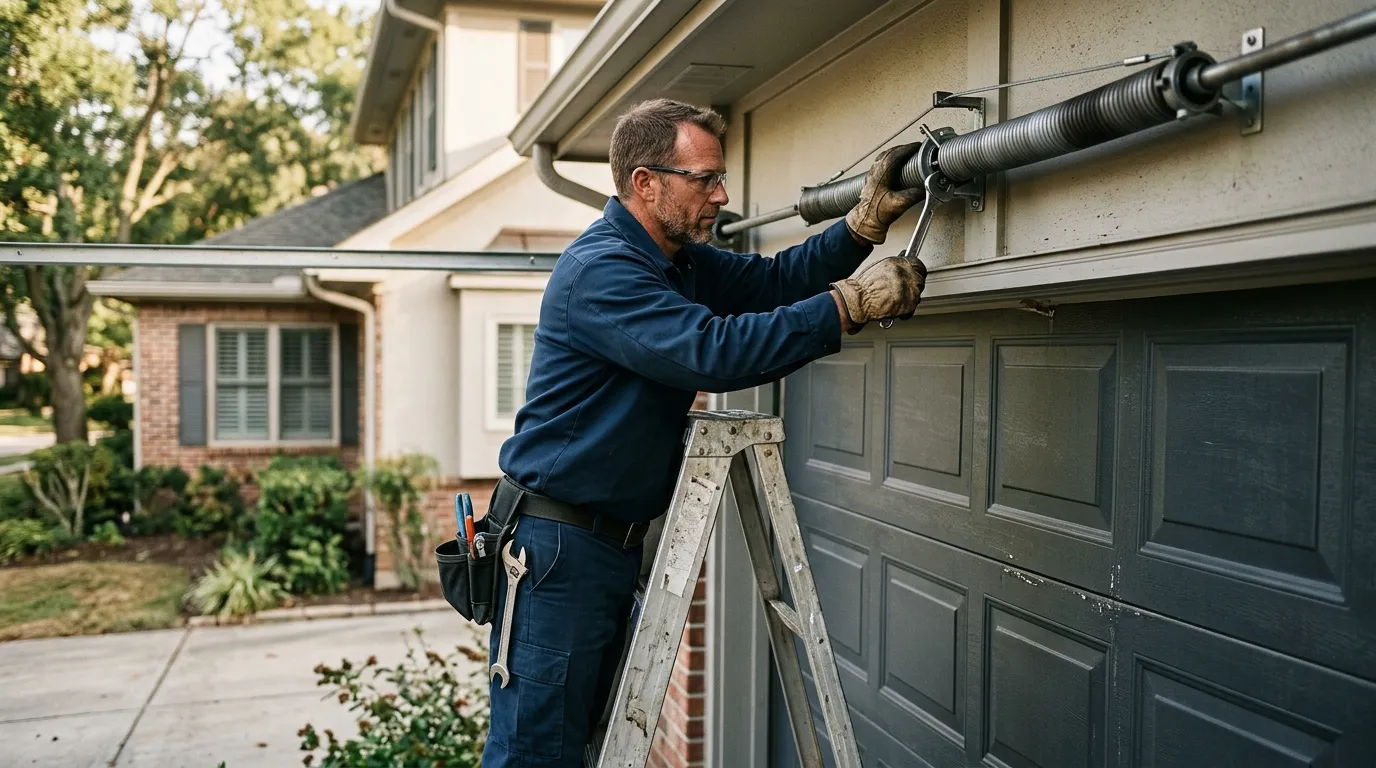
Why This Fails Locally
This area sits in a cold-severe climate band, and that matters more for panels than most people think. Steel panels flex with temperature swings, and on doors from the 1960s and 70s stock that make up most of what's out there, the foam-to-steel bond in insulated panels was never built for the freeze-thaw cycling we get every winter. Add winter road salt tracking in on tires and boots, and the bottom panel - the one closest to the slab - takes the worst of it.
Rust starts at the seam where two skins meet, not on the flat face, so it's often invisible until the panel bows or the seam splits open. Homes built closer to the median year of 1972 tend to have doors with thinner-gauge steel than what's sold today, which corrodes faster once the coating breaks down. None of this is a defect specific to one house - it's what this housing stock, in this climate, does to steel over fifty-plus years.
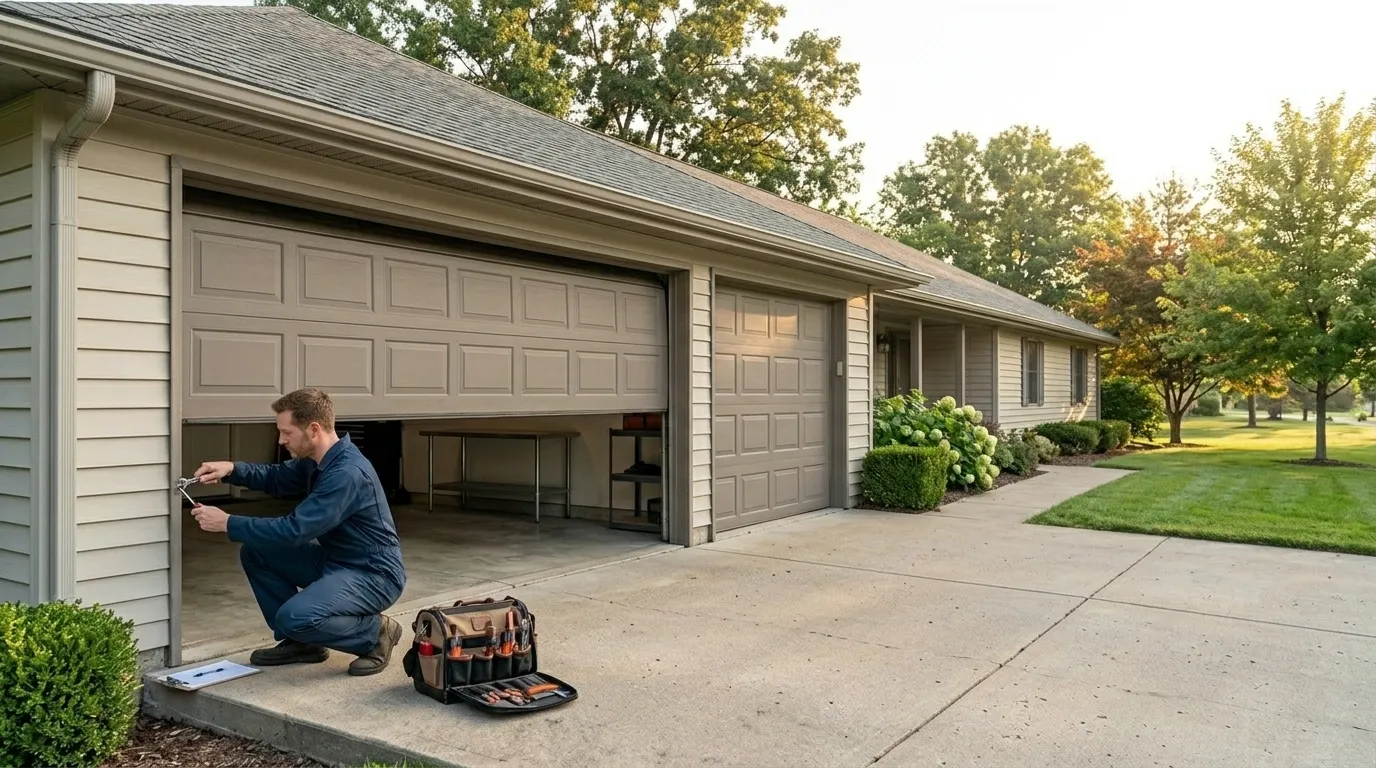
Doing It Yourself
Swapping a single panel sounds like a bolt-and-unbolt job, and on paper it is - loosen the hinges, pull the roller brackets, drop the old section, slide in the new one. In practice, the door is under spring tension the whole time, and pulling brackets on a loaded torsion system is how people get hurt. There's also the matching problem: if you order a panel online without knowing the exact model and section height, you can end up with a piece that doesn't key into your existing hinges or rollers at all.
We won't tell you it can't be done at home. Some newer doors with common panel sizes are straightforward. But on the older stock common around Hamilton, where the original panel line has often been discontinued, matching parts yourself usually means two or three return shipments before you find out a full replacement was the faster route from the start.
What You Are Seeing
A failing panel usually shows itself in a few specific ways. Rust bubbling along the bottom edge or at a horizontal seam means moisture has gotten between the steel skins, and it will keep spreading under the paint even if the surface looks fine. Hairline cracks running along a seam, especially near a hinge point, mean the panel has been flexing more than the steel can take - common after a few winters of freeze-thaw cycling.
A section that sags slightly at one hinge while the rest of the door tracks straight often means the panel itself has lost rigidity, not that the track is misaligned. And if you feel cold air pushing through a seam that used to seal tight, the foam core inside that panel has likely separated from the steel skin. None of these mean the whole door is failing, but they do mean the clock is running on that one section.
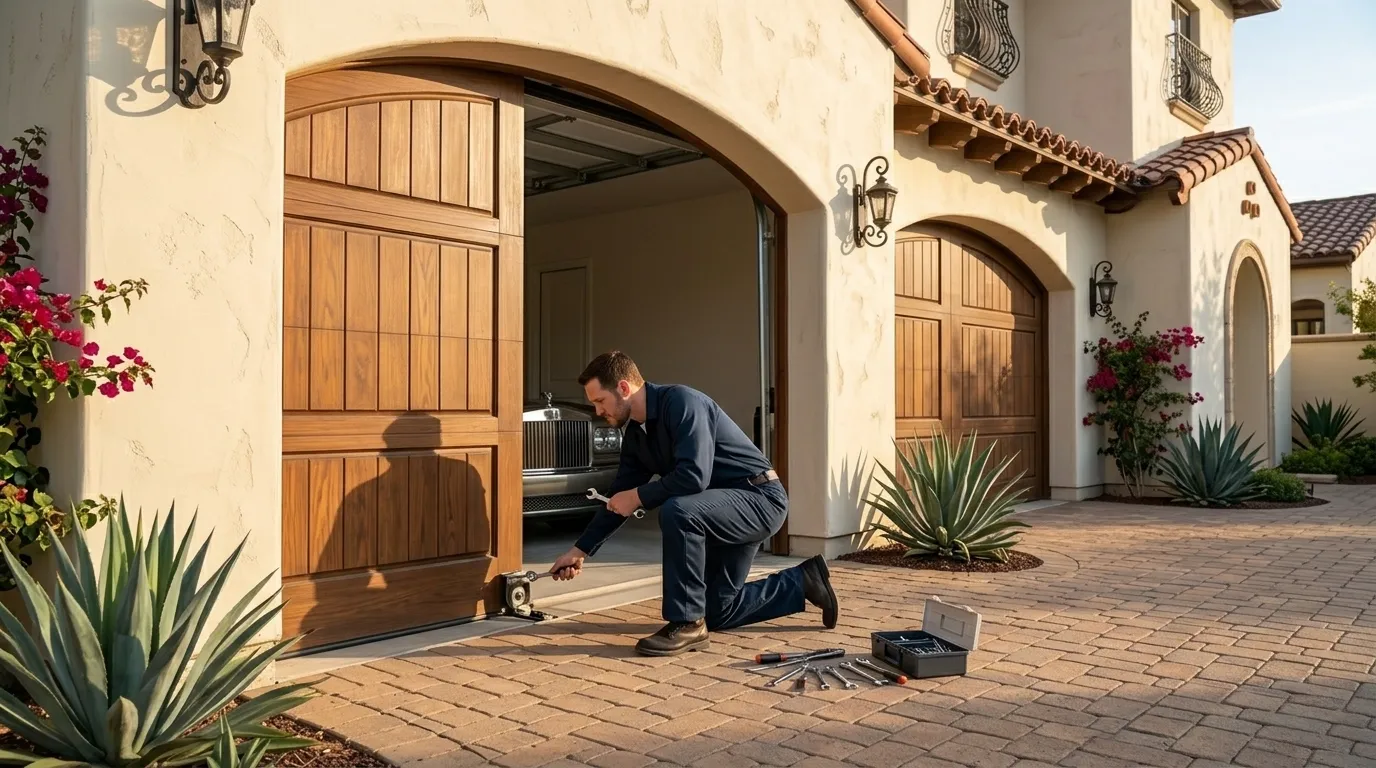
Talk to a Technician Before You Book
Describe what the door is doing and get a straight answer on what it likely needs.
Jobs Like Yours
Recent work from this service line.
Why Hamilton Calls Us
Frequently Asked Questions
Can you replace just one panel on my garage door instead of the whole door?
Sometimes. If your door is a common size and the manufacturer still makes that panel profile, a single-section swap is the cheaper and faster fix. On older doors from the 1960s and 70s, common in this area, the exact panel is often discontinued, and at that point a full door usually makes more sense than chasing a match.
Why did my garage door panel rust from the bottom up?
The bottom panel sits closest to the slab and takes the most exposure to melting snow, road salt, and standing moisture. In a cold-severe climate like this one, that panel goes through more freeze-thaw cycling than the rest of the door, and rust typically starts at the seam between steel skins before it shows on the face.
Is it worth repairing a cracked panel or should I replace the whole door?
It depends on how many panels are affected and how old the door is. One cracked section on an otherwise sound door is often worth fixing. If the door is original to a home built decades ago and more than one panel shows the same wear, a full replacement usually costs less over time than repeated single-panel repairs.
Need Panel Replacement for Hamilton-Area Garage Doors?
Call now for straight answers on cost and timing.