
Hamilton Garage Door Guide
Why So Many Hamilton Garage Doors Leak Heat
Hamilton, OH homes built 1938-2004 often carry doors with no insulation code behind them. Here's what that means for your heating bill and hardware today.
What You Pay
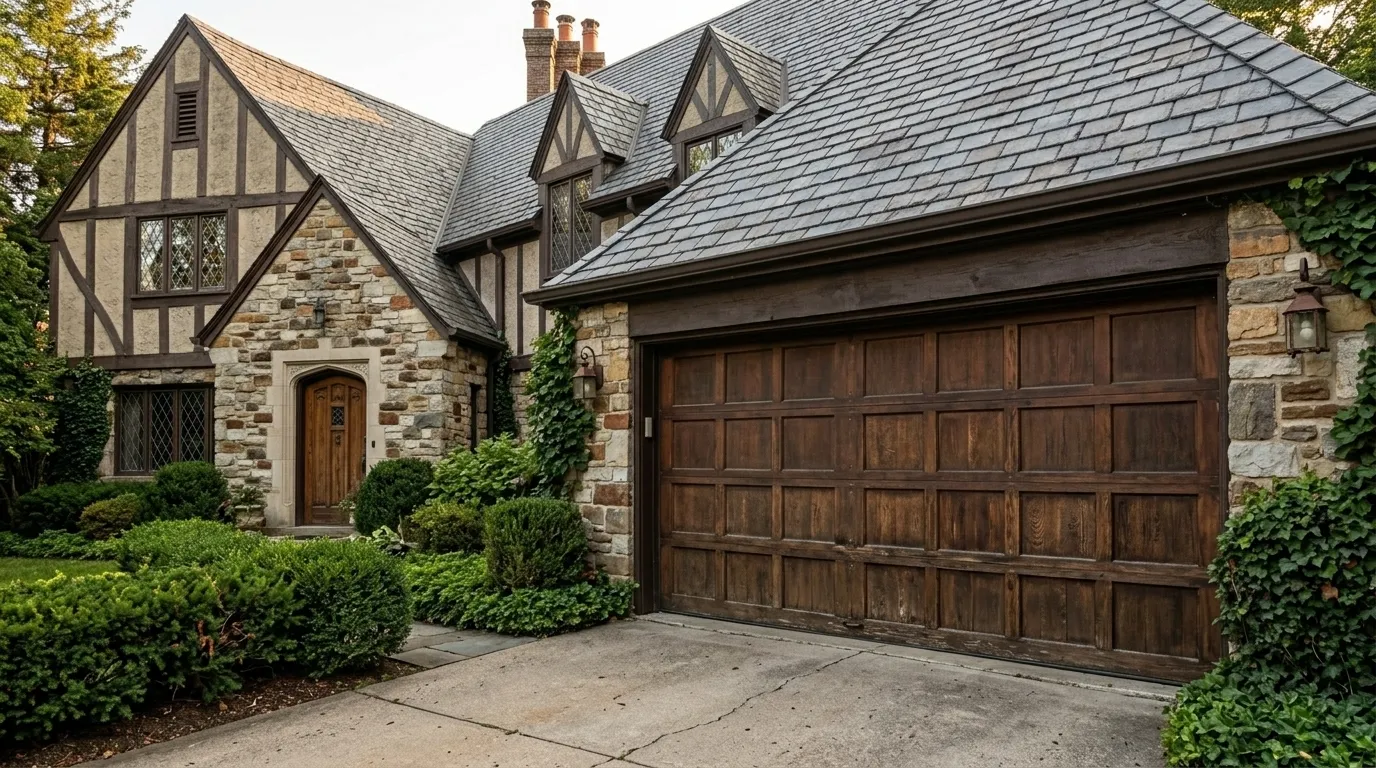
We're not going to hand you a number here, because we don't have one to give without seeing the door - the FACTS we work from don't include a price list, and quoting one anyway would be a guess dressed up as an answer. What we can tell you is what drives the cost once a tech is standing in front of your opener. A door from the original build era, single steel skin, no foam, usually needs either a full replacement or a retrofit insulation kit and new weatherstripping - the retrofit is cheaper but it's a patch, not a fix, if the panels themselves are rusted or bowed.
A door that's already been swapped for a sandwich-construction panel just needs normal spring or roller work, which costs less because you're not touching the shell. If your house falls in that median build year of 1972, ask the tech point blank whether you're looking at a patch job or a door that's earned its retirement. That answer changes the number more than anything else does.
The Problem
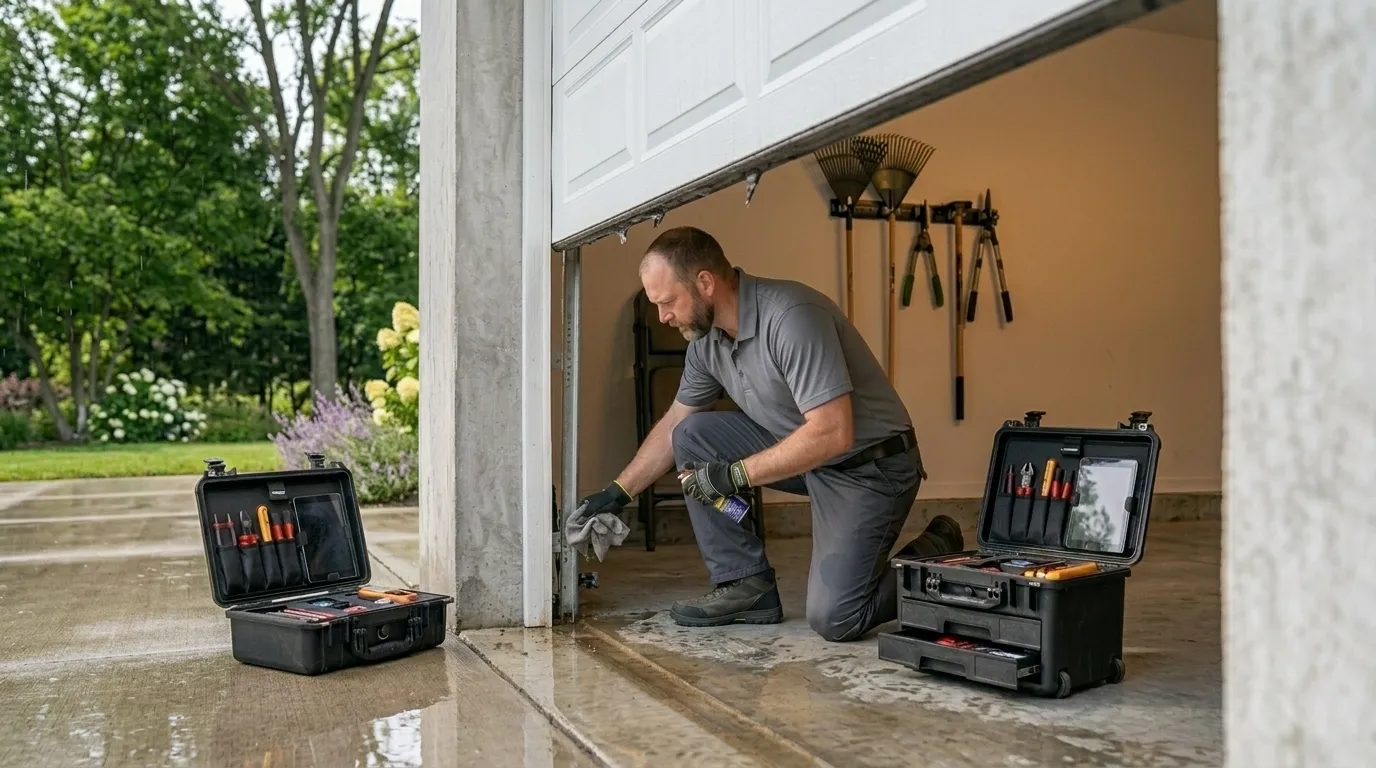
Housing in this area runs from 1938 up through 2004, with the median sitting around 1972, and most of that stock - across the 55 named areas that make up the wider Hamilton housing base - is concentrated in the 1960s and 70s. That matters because garage doors from that stretch were built to keep weather off a car, not to hold heat in a room. They're single-layer steel or, further back, wood plank, with no foam core and often no bottom seal beyond a thin rubber strip that's long past useful.
Nobody was writing insulation code for garage doors when these houses went up. So what you've got now, on a lot of streets in this town, is a door built for a job that's changed - garages have become workshops, gyms, laundry rooms, extra storage people actually walk into in January - while the door itself never got the memo. The gap shows up as a cold floor, a frosted windshield inside the garage, or an opener straining against a panel that's heavier than it should be from trapped moisture.

Checking It Yourself
Go out to the garage on a cold morning and put your hand flat against the inside of the door, mid-panel. If it's ice cold to the touch and you can feel a draft along the bottom edge, you're looking at an uninsulated door doing exactly what uninsulated doors do. Check the door's edge where a panel meets the frame - original steel doors from the 1960s-70s era are thin, usually a single layer you can flex slightly with your palm.
A foam-core door won't flex the same way and will feel warmer to the touch even in winter. Look at the bottom seal: if it's cracked, flattened, or missing chunks, cold air and meltwater are getting under it either way, insulated or not. Also check for condensation beads or rust streaks on the inside face of the door - that's moisture that's condensing because the door is colder than the air around it, which is what an uninsulated panel does in a cold-climate garage.
None of this fixes anything, but it tells you whether you're dealing with a seal problem or a whole-door problem before anyone quotes you work.
What Local Conditions Do
This area sits in a cold-severe climate band, and that's the piece that turns an old door from a minor inconvenience into a real problem. It's not the cold alone - it's the swing. A garage that drops to outdoor temperature overnight and then takes on residual heat from an attached house wall by afternoon puts a door through a freeze-thaw cycle most days of the winter.
On an insulated door that's a non-event. On a single-layer steel panel from the 1960s or 70s, that swing is what warps panels, cracks bottom seals, and seizes hinges with rust from repeated condensation. Across the households in this service area - north of 208,000, with more than 101,000 owner-occupied houses carrying this same vintage of door - that's not a rare complaint, it's a seasonal pattern.
With a median household income of $77,312 here, most owners are weighing a door replacement against other repairs, not treating it as a small line item, which is exactly why we'd rather tell you honestly whether a retrofit will hold or whether you're better off replacing the whole panel.
How We Can Help
Garage Door Repair
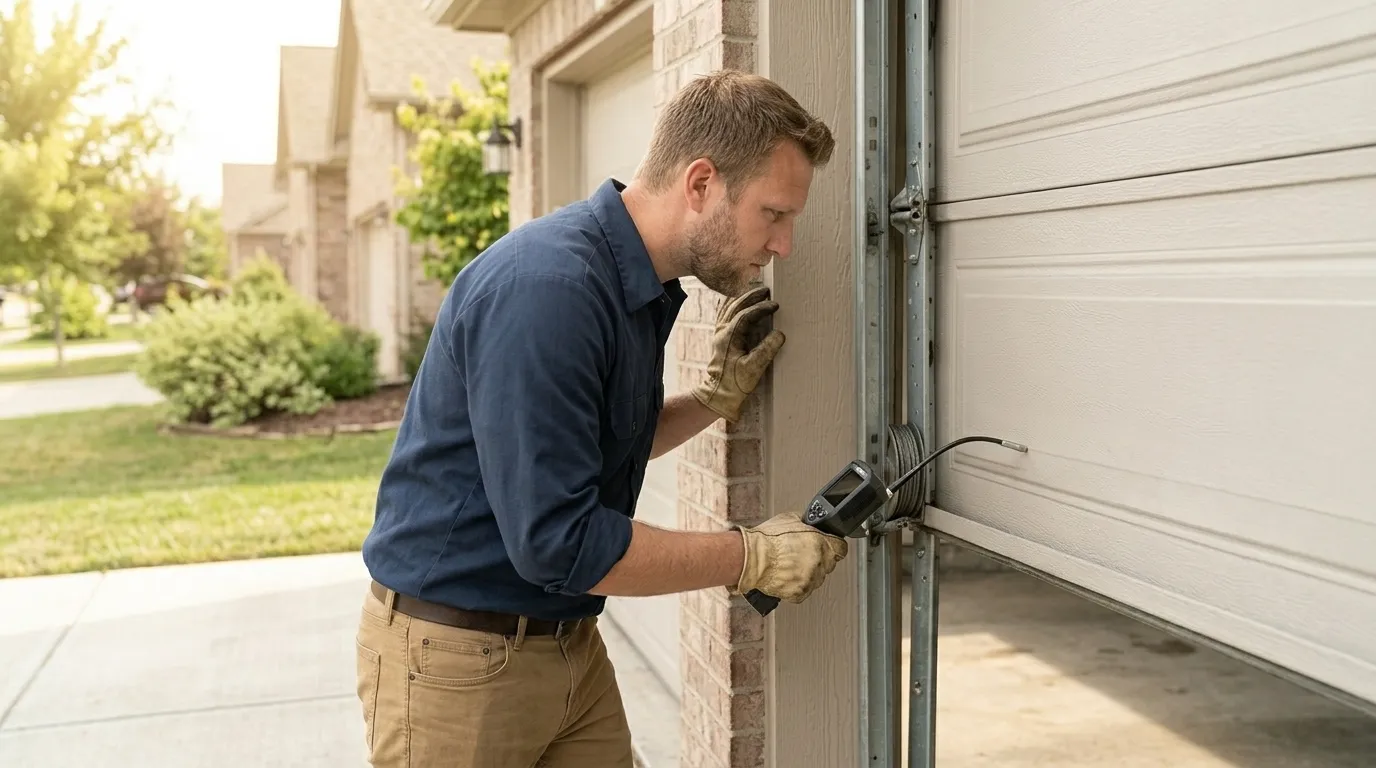
Springs, cables, tracks, rollers, and openers fixed by a tech who explains the problem before touching anything.
Learn more →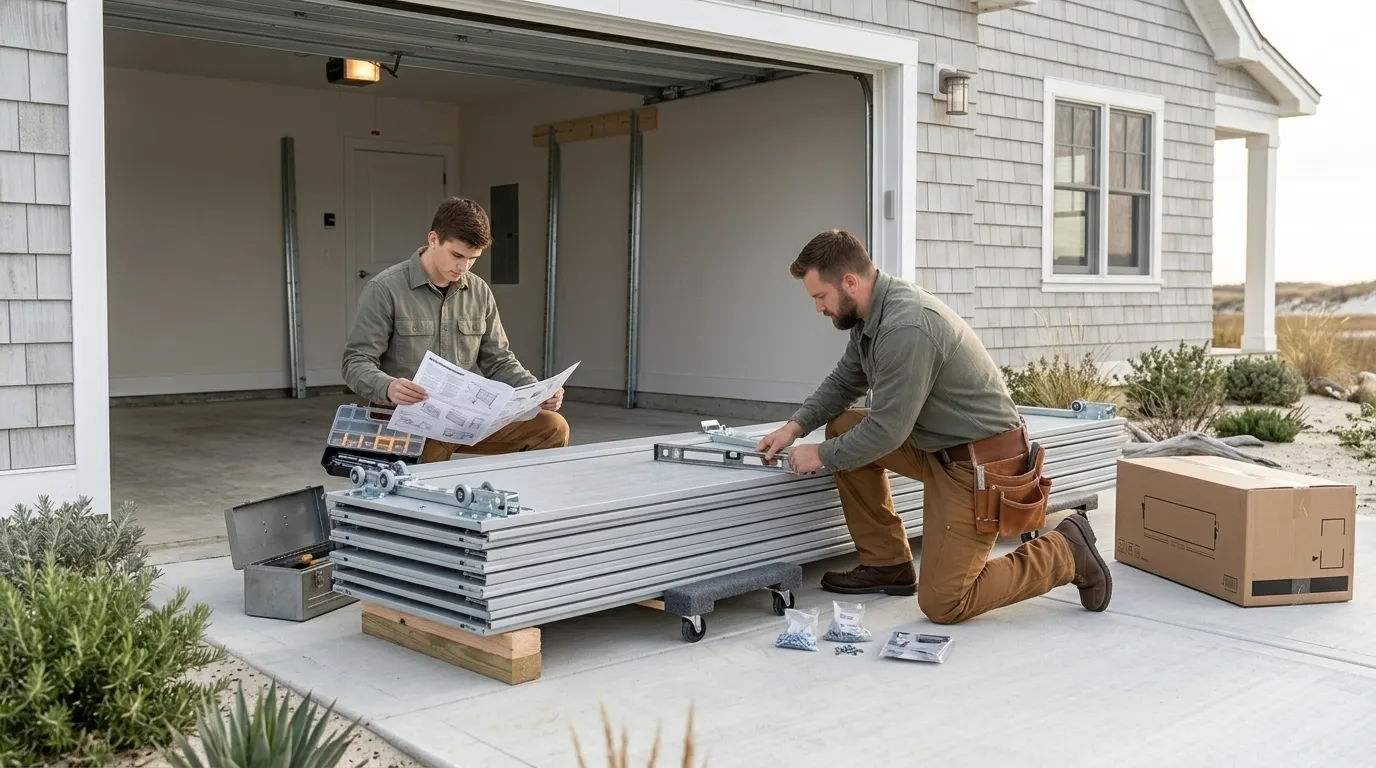
Garage Door Installation
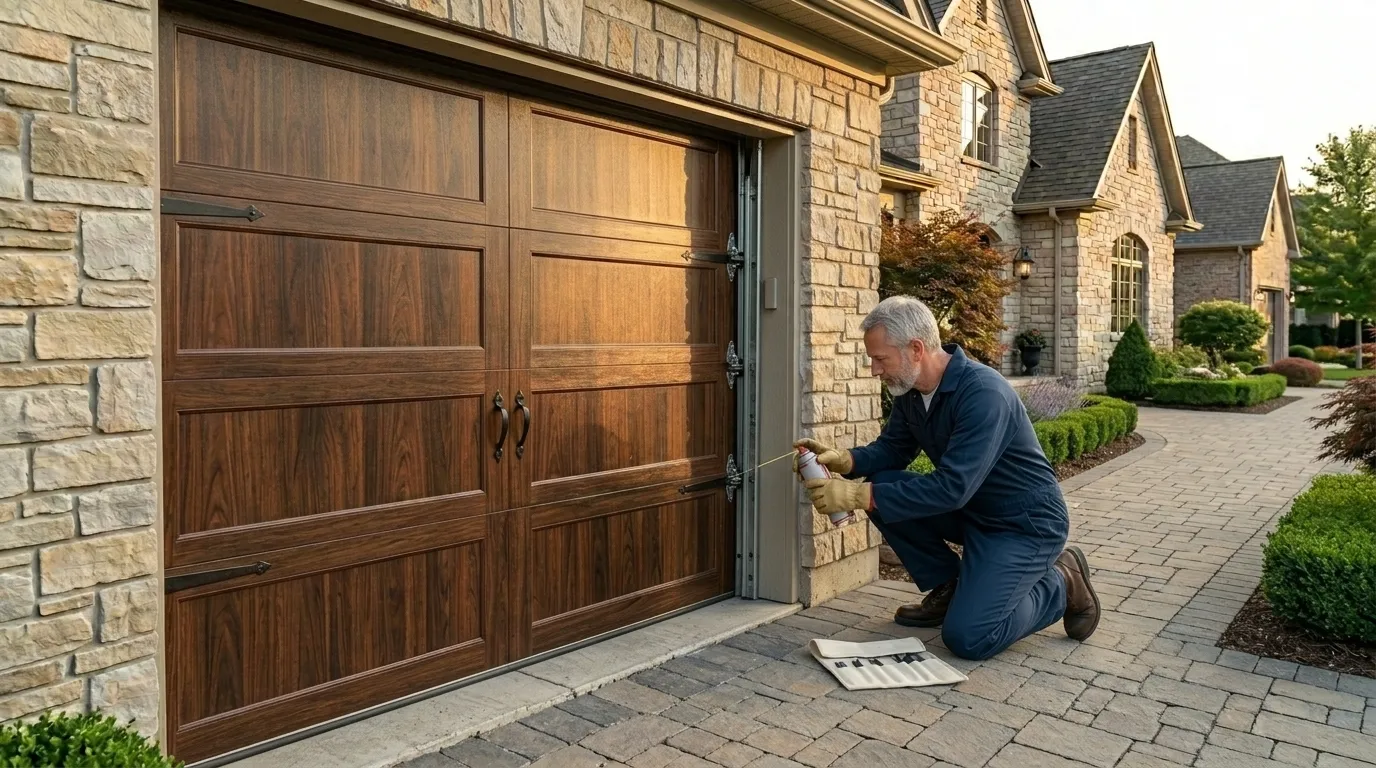
New sectional doors sized and installed for the housing stock actually built in this area.
Learn more →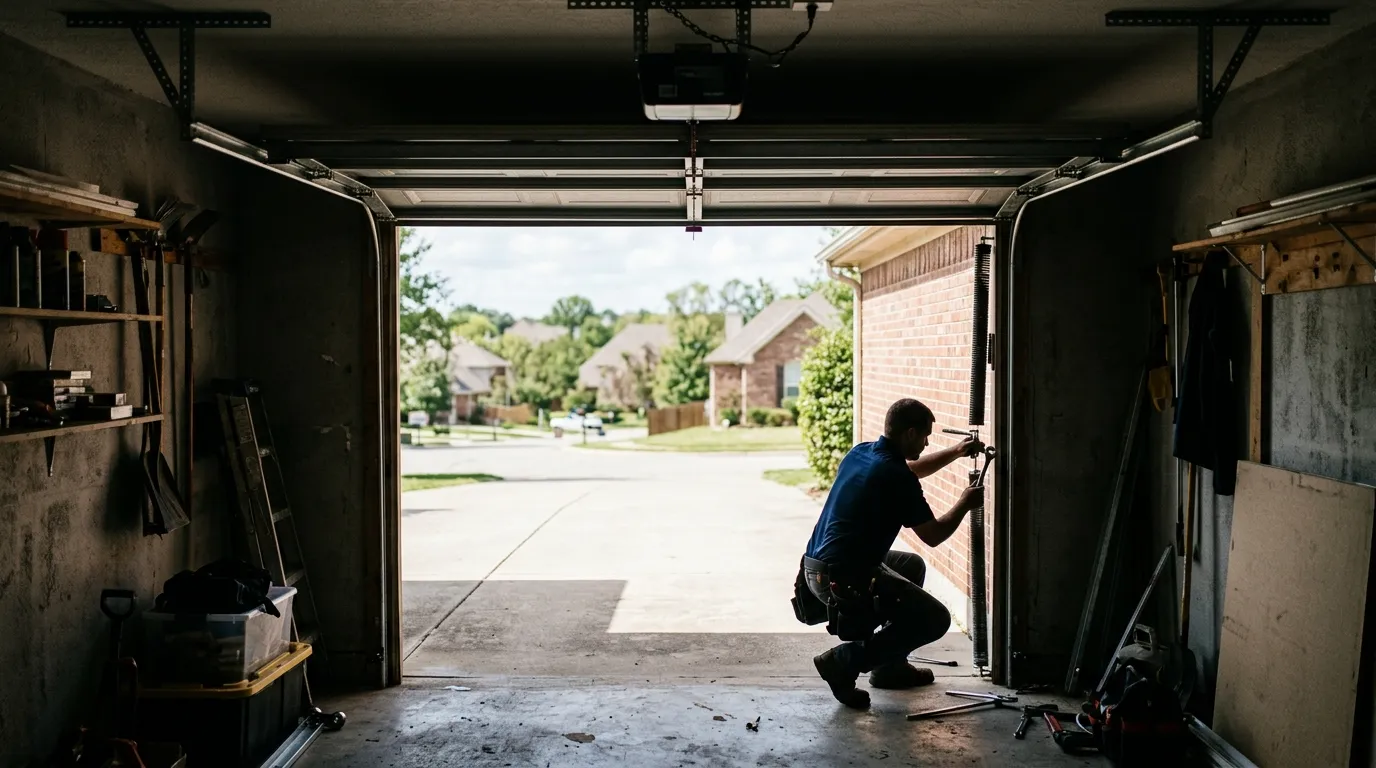
Garage Door Service
Tune-ups, lubrication, and safety checks that catch a small problem before it becomes a service call.
Learn more →Frequently Asked Questions
My garage door is freezing shut at the bottom, is that the seal or the door itself?
Usually the seal first - check if it's cracked or flattened before assuming the worst. But if the door itself is an original single-layer steel panel from the 1960s or 70s, expect this to keep happening every cold stretch until the door is insulated or replaced, because the panel has nothing stopping condensation from freezing at the base.
Is it worth insulating an old door instead of replacing it?
Sometimes. A retrofit kit works fine on a panel that's still flat and rust-free. If the steel is already bowed or the bottom edge is rusted through, insulation won't fix that - you'd be putting foam behind a door that's already failing structurally. We'd rather tell you that up front than sell you a kit that buys you one winter.
Why does my garage feel colder than it did years ago?
Seals and hinges wear, and once a bottom seal flattens or a panel starts to sag slightly, the gaps let in more cold air than they used to. On a house from the 1938-2004 build range common around here, that wear tends to show up around the 40 to 50 year mark on the original door.
Does the cold actually damage garage door hardware, or just the door panel?
Both. Repeated freeze-thaw swings stiffen and crack old weatherstripping, but they also rust hinges and roller shafts where condensation collects, and that rust is what eventually makes a track bind or a spring corrode unevenly. It's rarely just the panel.
Have a Door That Needs a Second Opinion?
Call and describe what it is doing - we will tell you what it likely is.