
Hamilton Garage Door Guide
What That Noise Coming From Your Garage Door Actually Means
A grinding, popping, or slapping door in Hamilton usually points to age and cold, not bad luck. Here's how to tell which noise means a real problem.
What You Pay
We don't post a price list here because the honest answer is: it depends on what's making the noise and what's behind your wall. A worn roller on a 2000s-built door in one of the newer pockets of this service area is a different job than a torsion spring on a door that's been on the same 1960s or 70s track since it was hung. Housing here runs from 1938 up through 2004, with the median landing around 1972, so a lot of the hardware we see is original or close to it.
That age spread matters for cost. Some parts for older torsion setups aren't sitting on a shelf anymore - we sometimes have to source them, which can add a day or two versus a same-day swap on newer opener gear.
We'll tell you straight if your door is a repair or if you're better off replacing it, rather than stacking service calls on hardware that's past its working life. If a shop quotes you before they've seen the door, be skeptical of that number either way.
The Problem
A garage door makes noise for a reason, and in a service area where most homes were built between 1938 and 2004 - median 1972 - that reason is usually wear, not a mystery. Steel rollers and torsion springs installed on a house from that era have had decades of thermal cycling to loosen mounting hardware, wear roller bearings, and stretch cables.
A slapping sound on the way up is often a roller that's worn flat on one side. A grinding sound is metal-on-metal where a bearing used to be.
How We Can Help
Garage Door Repair
Springs, cables, tracks, rollers, and openers fixed by a tech who explains the problem before touching anything.
Learn more →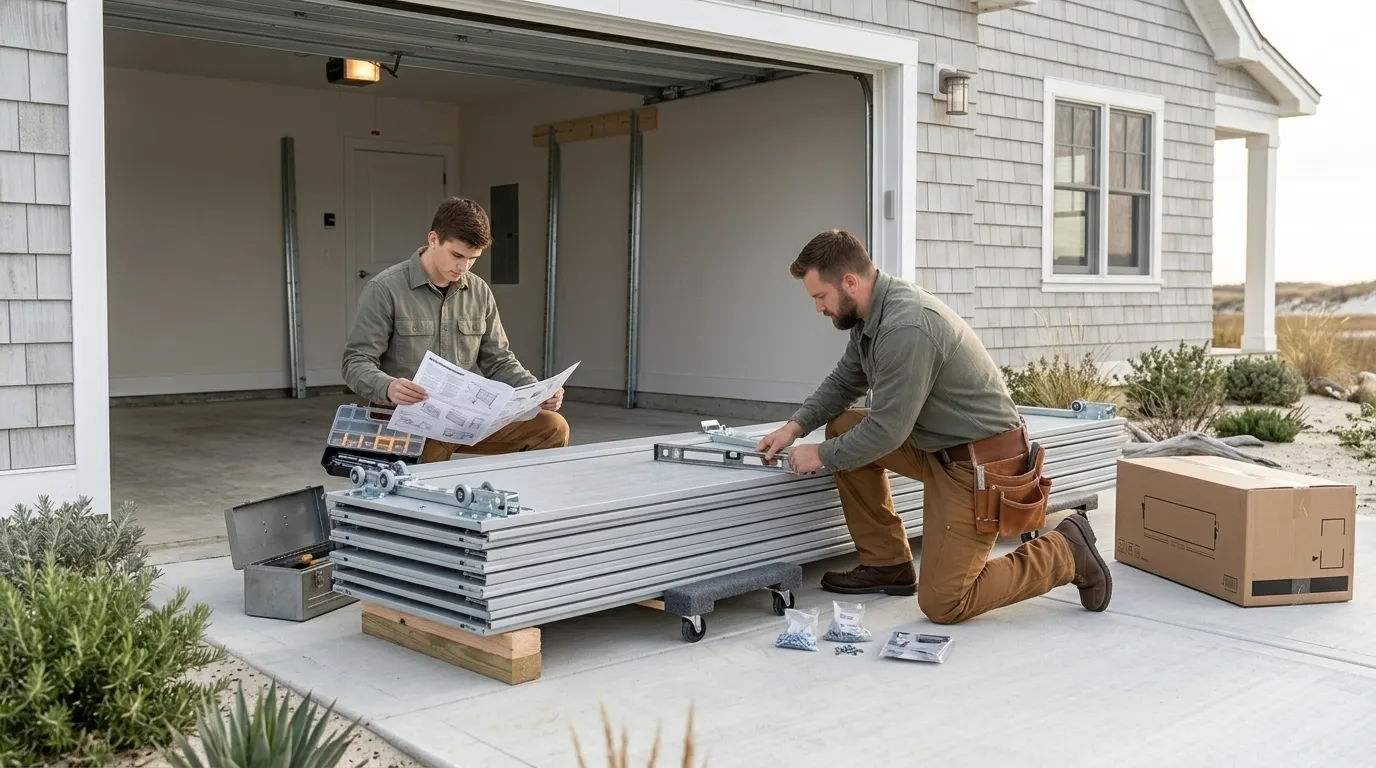
Garage Door Installation
New sectional doors sized and installed for the housing stock actually built in this area.
Learn more →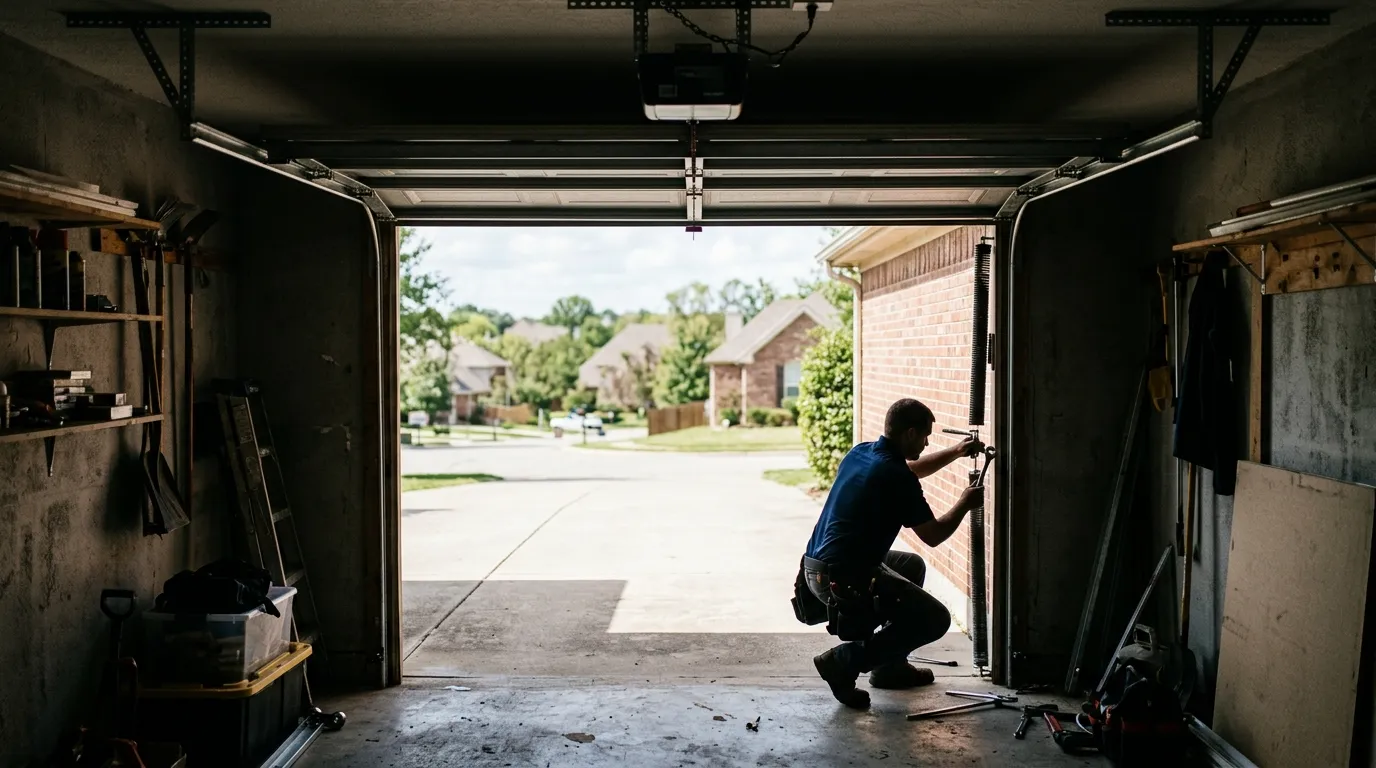
Garage Door Service
Tune-ups, lubrication, and safety checks that catch a small problem before it becomes a service call.
Learn more →Frequently Asked Questions
My door makes a loud pop when it opens. Is that a spring?
A single sharp bang, usually followed by the door feeling heavy or refusing to open smoothly, is the classic sign of a broken torsion spring. On the older hardware common across this service area's 1960s and 70s housing, that spring may be original. Don't try to lift the door yourself once this happens - the counterbalance is gone and it's heavier than it looks.
Why does my garage door only make noise in winter?
Hamilton sits in a cold climate band severe enough that metal contracts noticeably in low temperatures. Torsion springs tighten, track alignment shifts slightly, and old lubricant stiffens up. A door that's silent in July and grinding in January is telling you the hardware is marginal and the cold is just exposing it.
Is a rattling noise from the opener serious?
Usually it means a loose mounting bolt on the rail or a chain that's stretched and needs tensioning. It's rarely urgent, but it's worth checking soon - a rattle that's ignored for a season often turns into a chain that jumps the sprocket, which is a bigger job.
Can I fix a noisy roller myself?
If it's a nylon roller and you can see it's cracked or worn flat, swapping it is within reach for most owners with the door secured and springs left alone. If the noise is coming from the spring or the cable side, that's not a DIY repair - the stored tension can cause real injury.
Have a Door That Needs a Second Opinion?
Call and describe what it is doing - we will tell you what it likely is.