
Hamilton Garage Door Guide
When the Power Goes and the Opener Won't: A Hamilton Homeowner's Guide
Hamilton homes run 1938-2004 with a 1972 median build year, in a cold-severe climate band. Here's what that means when the power drops and your opener won't move.
What You Pay
We don't have a fixed number to hand you here, and giving you a made-up range would be worse than saying nothing. What you pay depends mostly on one thing: is this an opener problem, or a spring problem wearing an opener's clothes.
A lot of calls we could take for a "dead opener" turn out to be a torsion spring that seized in the cold and is putting so much drag on the door that the opener motor just gives up trying. That's a different repair, a different cost, and a different urgency than swapping a motor unit.
Across the 55 named areas in this service area, most garages carry that same 1960s-70s build pattern, which means the wiring and header clearance were set up for openers half the horsepower of what's sold today. If your garage falls into that group, expect a technician to spend real time just confirming what's actually wired in before quoting anything. That inspection time is part of what you're paying for, not padding.
With a median household income of $77,312 across the area, most owners here can afford to replace a dead opener rather than nurse a 20-year-old unit through another winter, but plenty still choose to keep the old one running as long as it'll go. Both are reasonable calls. We just need to know which one you're making before we start.
The Problem
Openers and power cuts fail together for a specific reason, not a random one. Hamilton's housing stock runs from 1938 to 2004, with the median year sitting at 1972, so a lot of openers in this service area are original to additions or garage conversions done decades before battery backup was ever a factory option. When the power drops, those units simply stop.
No chime, no standby light, nothing. The homeowner assumes the opener itself died, when really it's just doing exactly what a non-backup unit built forty years ago is supposed to do in a blackout.
This area sits in a cold-severe climate band, so a hard freeze that trips a breaker or knocks out a line doesn't just kill your opener - it can seize a torsion spring that was already cold-soaked, stiffened by low temperatures overnight. Try to force the door open by hand at that point and you're fighting spring tension the opener was quietly compensating for. That's how a simple power cut turns into a bent track or a strained back inside of five minutes.
The honest limitation here: we can't diagnose over the phone whether your specific failure is the opener, the power, or the spring. Someone has to look at the unit and pull the manual release to know for sure.
Checking It Yourself
Before you call anyone, there are a few things worth checking on your own, especially in the middle of a winter outage when a truck may not reach you right away.
First, find the manual release cord - the red-handled pull hanging from the trolley on the track. Pulling it disconnects the door from the opener carriage so you can lift the door by hand. If you've never located it before an outage, now is the time, not during one.
Second, once released, try lifting the door slowly by hand. A door on a working spring should feel roughly balanced - heavy, but liftable, and it should stay wherever you stop it.
If it feels dramatically heavier than that, or it drops on its own, stop. That's spring tension talking, not the opener, and it's not a DIY fix.
Third, check whether your opener has a battery backup unit - a black box mounted near the motor head, sometimes with its own small indicator light. Out of 208,045 households and 101,416 owner-occupied houses in the service area, a share large enough to matter are still running the same opener that came with a 1970s or 80s build, and those units almost never have backup power built in. If yours doesn't, that's worth planning around before the next storm, not during it.
What Local Conditions Do
Cold doesn't just slow things down here, it changes what breaks first. In a cold-severe climate band, steel torsion springs lose flex as temperatures drop, and an opener motor that's rated for a certain load in July can stall trying to move that same door in January. That stall reads to most homeowners as "the opener died," when the opener is often fine - it's just being asked to out-muscle a spring that's fighting it.
Power cuts compound this because a cold snap severe enough to seize a spring is often the same weather knocking lines down. So the two failures - stiff spring, no power - tend to arrive on the same night, which is exactly when it looks like total opener failure instead of two separate, smaller problems.
The age of the housing stock matters just as much as the weather. With a median build year of 1972, a large share of garages in this service area were fitted with openers well before battery backup, rolling-code security, or even standard photo-eye sensors were required equipment. An opener installed in a home built in that era has usually been replaced once already, sometimes twice, and each replacement inherited whatever wiring and header clearance the original 1970s garage was built with - not always a clean match for what's sold today.
How We Can Help
Garage Door Repair
Springs, cables, tracks, rollers, and openers fixed by a tech who explains the problem before touching anything.
Learn more →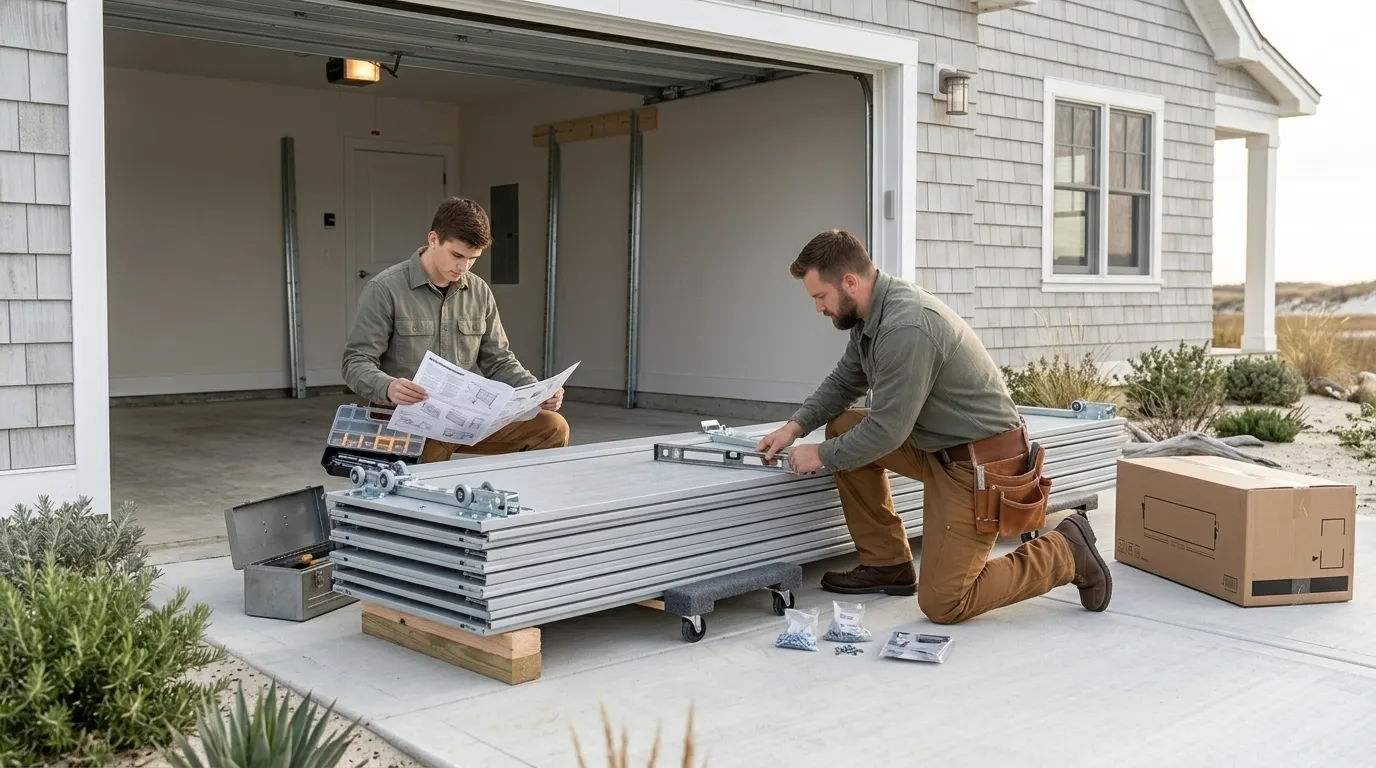
Garage Door Installation
New sectional doors sized and installed for the housing stock actually built in this area.
Learn more →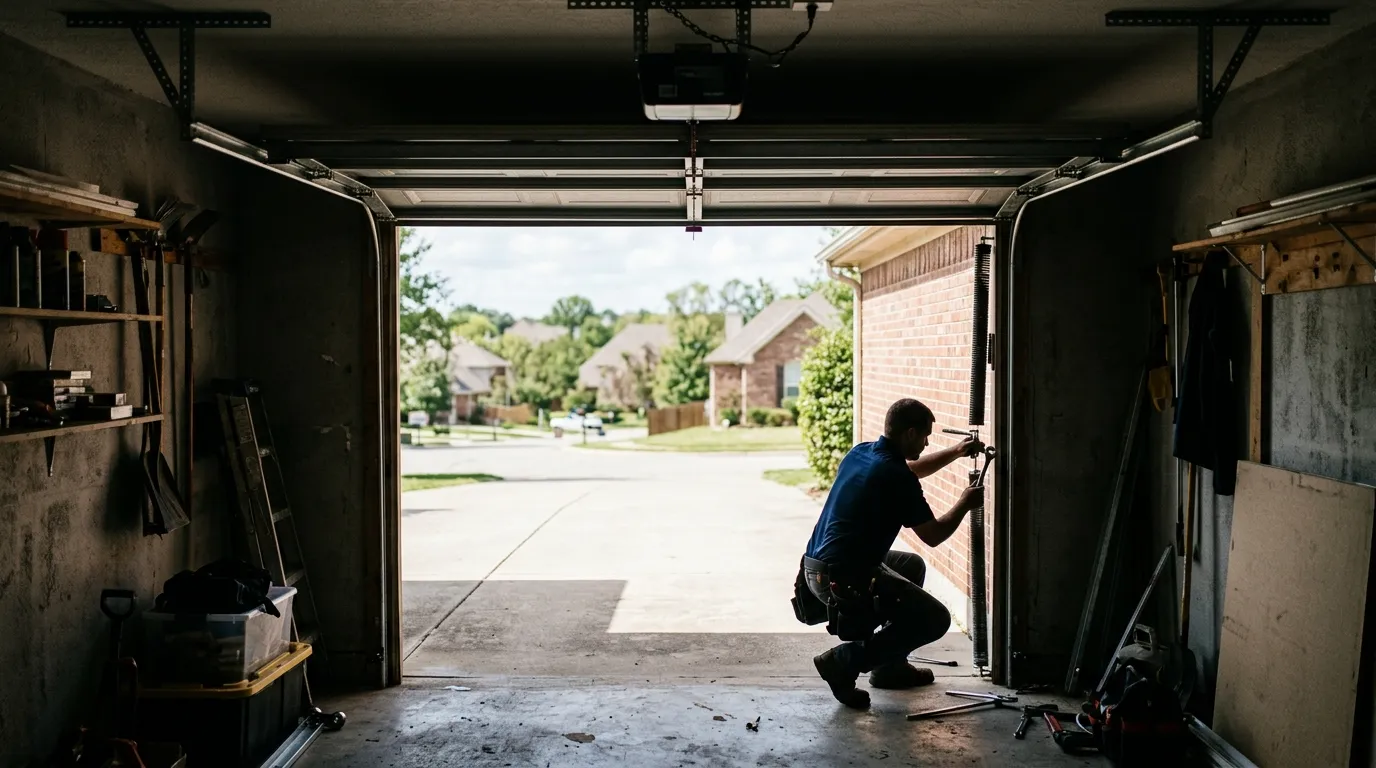
Garage Door Service
Tune-ups, lubrication, and safety checks that catch a small problem before it becomes a service call.
Learn more →Frequently Asked Questions
Why did my garage door opener stop working the moment the power went out, but my neighbor's kept running?
It depends on whether the unit has a battery backup. A lot of openers installed decades ago, common in this area's older housing stock, never had one. Newer units often do. If yours cut out instantly and stayed dead, that's the most likely explanation - not a separate failure.
Is it safe to pull the manual release cord during a power cut?
Yes, that's what it's for. Pull it, then lift the door slowly by hand. If it feels balanced and stays where you stop it, you're fine to operate it manually until power's back. If it feels heavy or drops on its own, stop and don't force it - that points to a spring problem, not just the outage.
How cold does it need to get before my spring is at risk during an outage?
We don't have a specific temperature threshold to give you, but this area sits in a cold-severe climate band where hard freezes are common in winter, and steel springs stiffen well before a homeowner would notice discomfort themselves. A stalled opener during a cold snap is worth treating as a possible spring issue, not just a power problem.
Should I just replace my old opener instead of waiting for it to fail during an outage?
If your opener predates battery backup and you've had more than one outage-related failure, replacement is often the more sensible move than repeated emergency calls. We can't tell you it's worth it without seeing the unit, but it's a fair question to raise before the next winter, not during it.
Have a Door That Needs a Second Opinion?
Call and describe what it is doing - we will tell you what it likely is.