
Hamilton Garage Door Guide
Is Your Hamilton Garage Door Worth Repairing or Time to Replace
Hamilton homes mostly date to the 1960s-70s boom, and cold winters are hard on original hardware. Here's how to tell if your door is worth repairing.
What You Pay
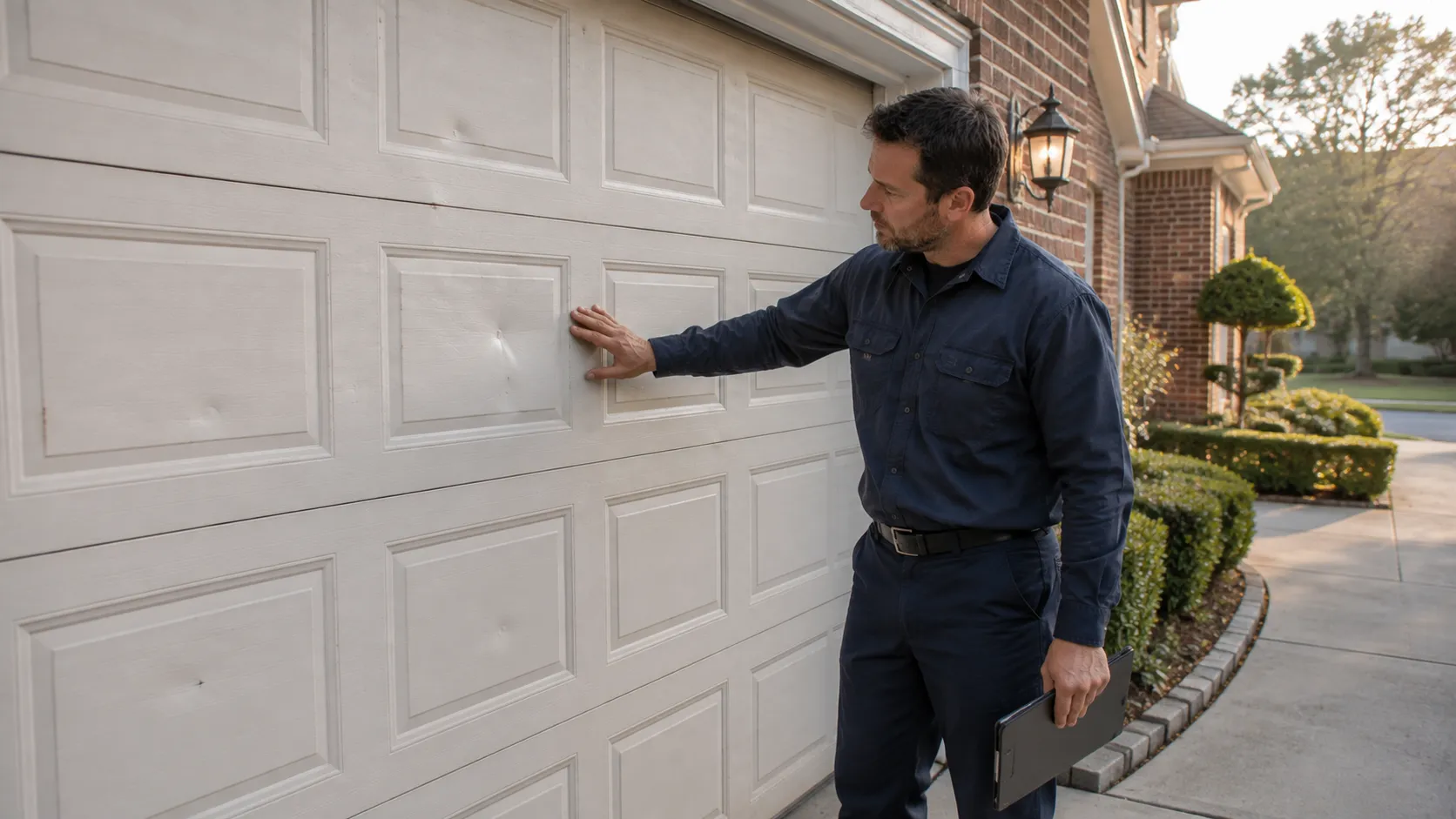
We can't quote a number here without seeing the door, but a few things about Hamilton houses drive the cost math either way. A lot of the housing stock in this area went up between 1938 and 2004, with the median build year sitting around 1972, and most of the 55 named areas we work in are dominated by that 1960s-70s wave of construction. Doors from that era were often built with steel gauges and spring systems that don't match what's sold today, so a repair sometimes means sourcing an odd-size panel or an obsolete track width instead of grabbing a stock part.
That pushes labor and parts time up compared to a newer door where everything is standard. On the other side, replacement costs more up front but resets you to current hardware that's rated for the cold-climate stress this region sees every winter. The honest answer is that a single broken spring or a bent roller is almost always worth fixing regardless of the door's age.
A door that's cracked, delaminating, or has a warped track from years of freeze-thaw cycling is a different conversation, and that's where we walk you through both options instead of just quoting the repair.
The Problem
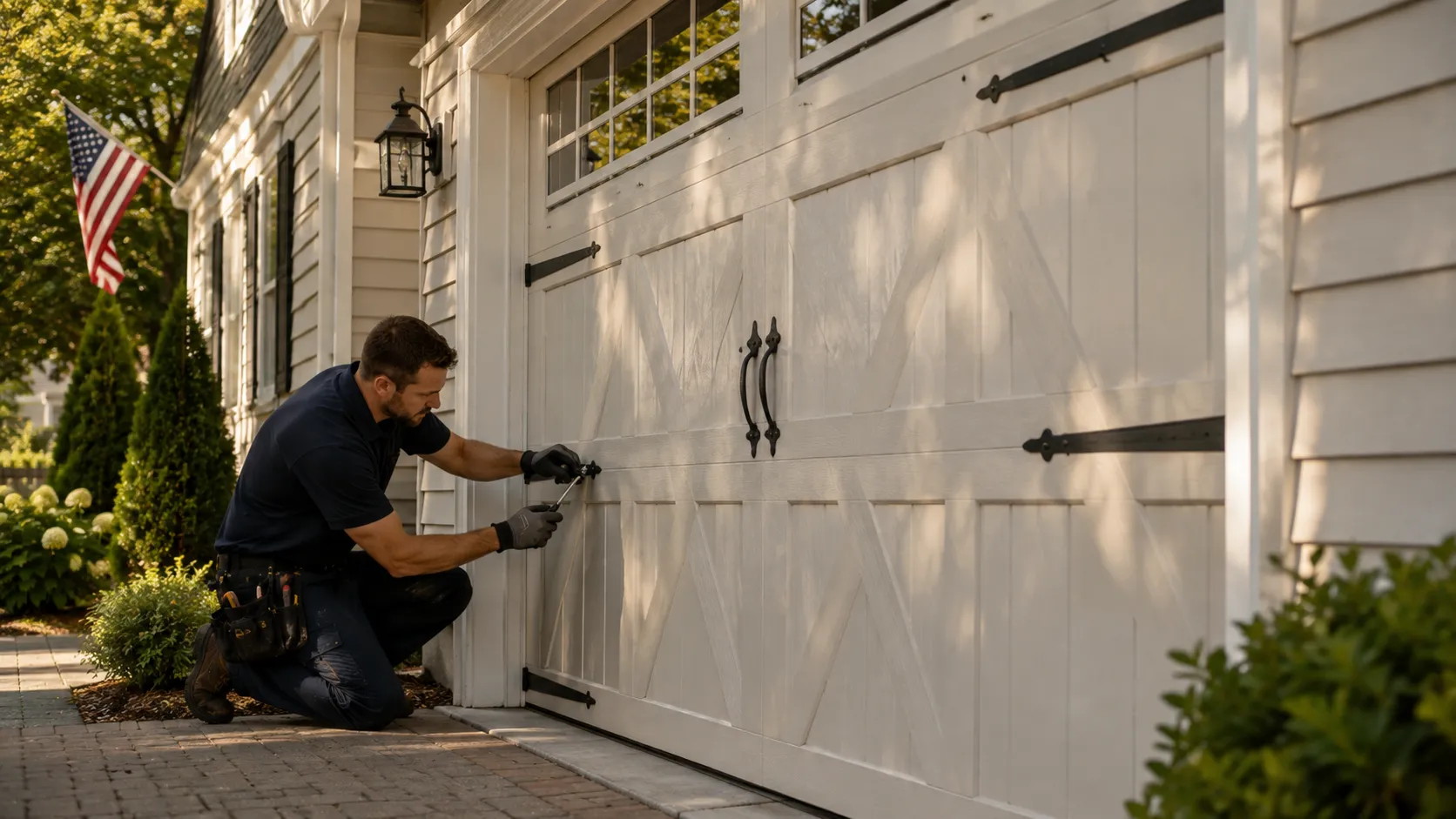
Hamilton's climate is classed as severe cold, which matters more for garage doors than most people think. Cold doesn't just stiffen grease and shrink metal tolerances - it's the repeated freeze-thaw cycling through a Hamilton winter that works panel seams, weakens door bottom seals, and puts uneven load on torsion springs that were never rated for it when they were installed on a house built in, say, 1968. A door original to a home from that median 1972 build year has usually seen five decades of that cycling.
The steel doesn't fail all at once. It shows up as a spring that finally lets go on the coldest morning of the year, a track that's pulled slightly out of plumb from repeated contraction, or hinges that have worked loose because the panel flexes more than it did when it was new. None of that means the door is junk.
It means the parts are tired in specific, predictable ways tied to how long they've been absorbing that seasonal stress.
Checking It Yourself
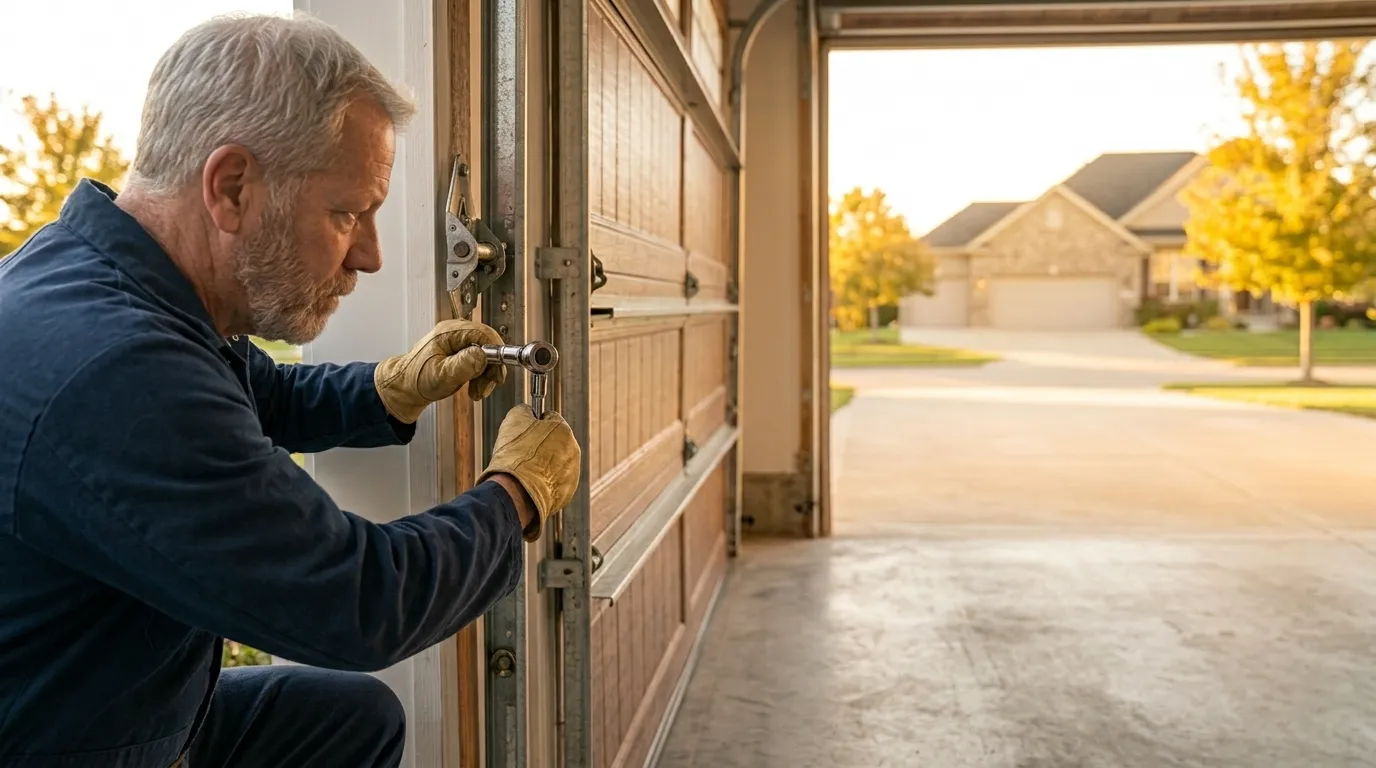
Before you decide anything, look at three things. First, the springs - if you have exposed torsion springs above the door, check for a visible gap in a coil, which means it's broken and the door needs a spring swap, not a full replacement. Second, the panels - press a thumb into a lower panel section; if it feels soft or spongy, moisture has gotten into the core over the years of Hamilton winters and that panel (or the whole door) is on borrowed time.
Third, the track - stand back and sight down its length. A track that's bowed or pulled away from the wall is often a symptom of decades of a spring pulling unevenly rather than a track problem on its own. If the springs and panels check out solid and it's just noise, a loose roller, or a slow opener, that's a repair almost every time, regardless of how old the house is.
If you're finding soft panels and a bowed track together, that combination usually means the door has been fighting itself for a while and it's worth having someone look at the whole system, not just the noisy part.
What Local Conditions Do
With 101,416 owner-occupied houses across the area and a median household income of $77,312, most homeowners here are weighing a real repair-versus-replace decision, not shopping for an upgrade. Given that this area's housing runs 1938 to 2004 with most of it concentrated in that 1960s-70s stretch, we see the same pattern across neighborhoods from Fairfield to Seven Mile to Pleasant Run: doors that are structurally sound but running on original springs and rollers that were sized for a different era of hardware standards. Severe cold climate means the spring cycle count matters more here than in a milder region - a spring rated for a certain number of cycles wears through them faster when it's also absorbing thermal contraction every winter.
That's why we look at a door's age in the context of what it's been through, not just the calendar. A 1970s door with a replaced spring and solid panels can outlast a newer door that's been neglected. One limitation worth saying plainly: if a door's track mounting has pulled away from the framing and the wood behind it has softened, that's a repair we won't just patch, because a rebuilt door on rotted framing fails again fast.
How We Can Help
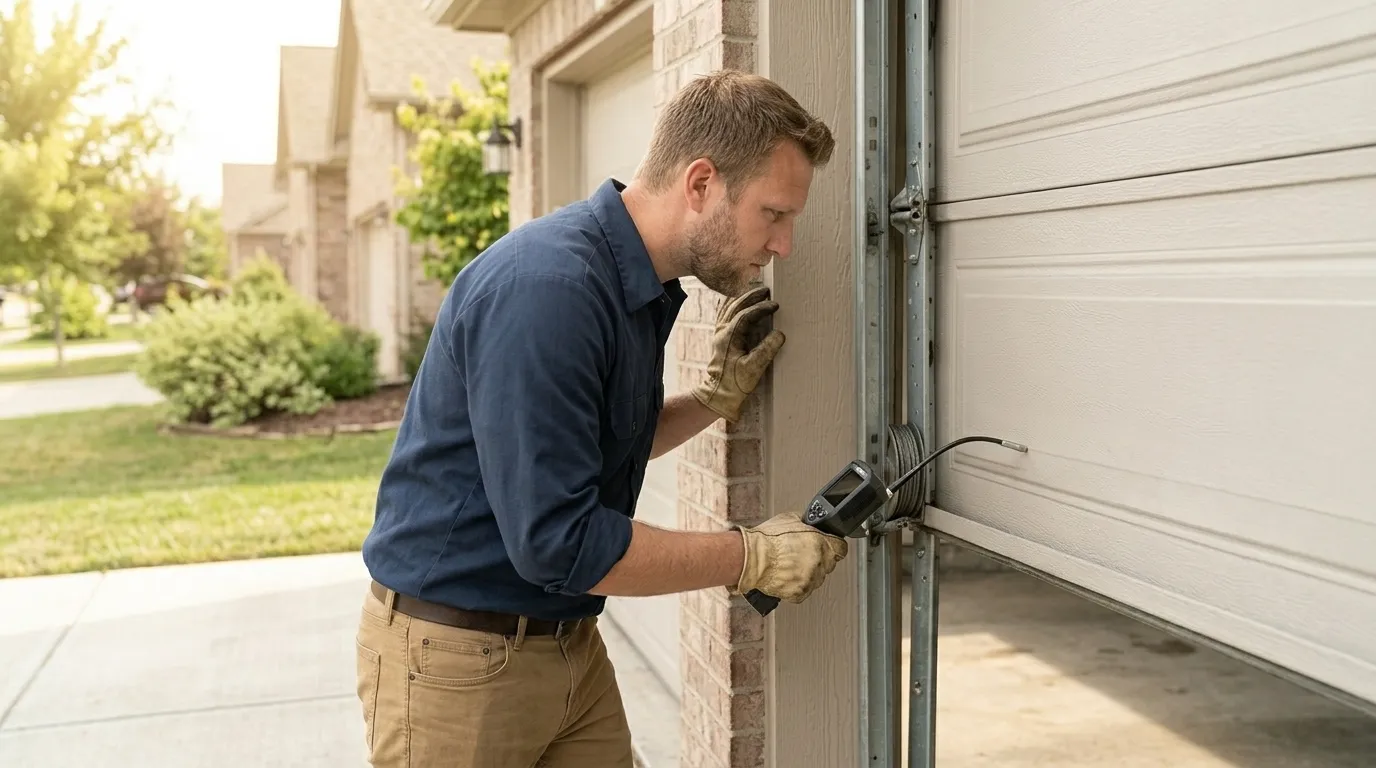
Garage Door Repair
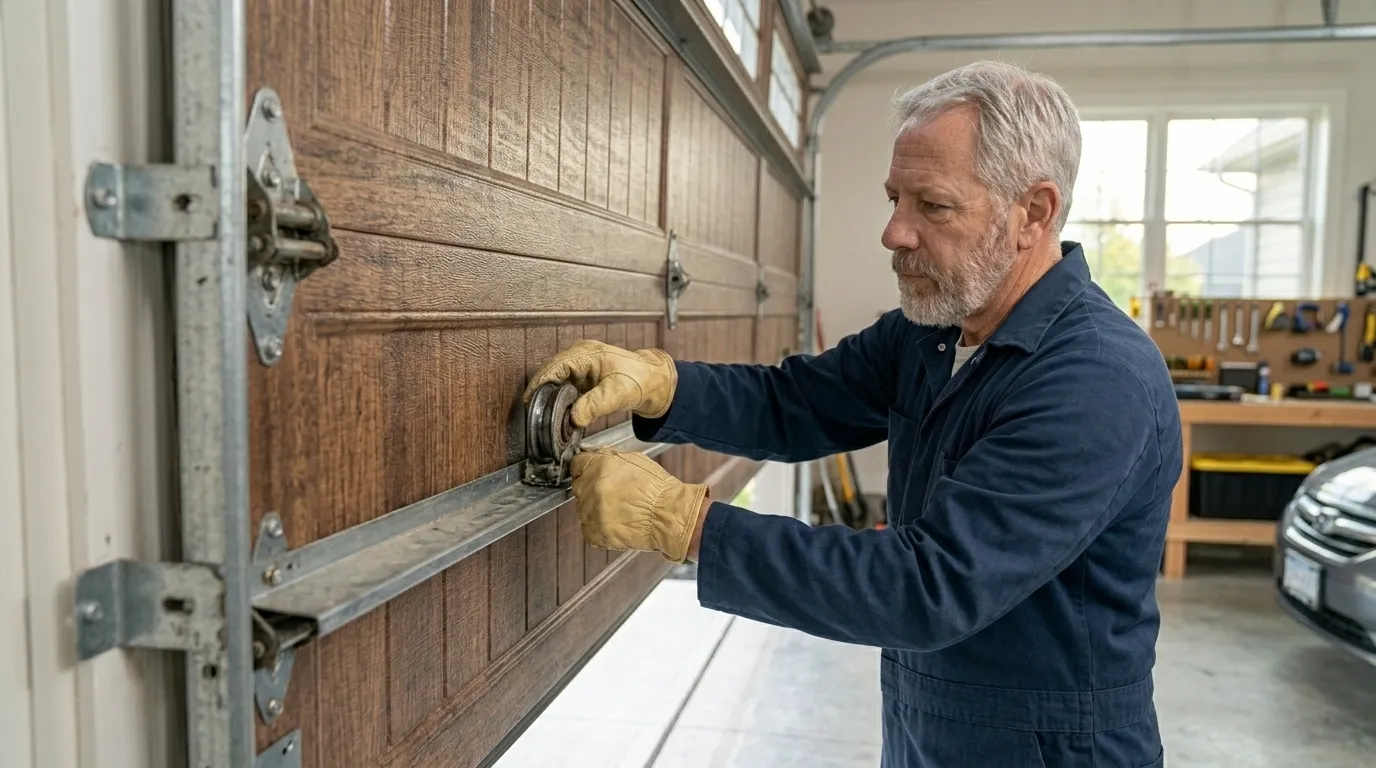
Springs, cables, tracks, rollers, and openers fixed by a tech who explains the problem before touching anything.
Learn more →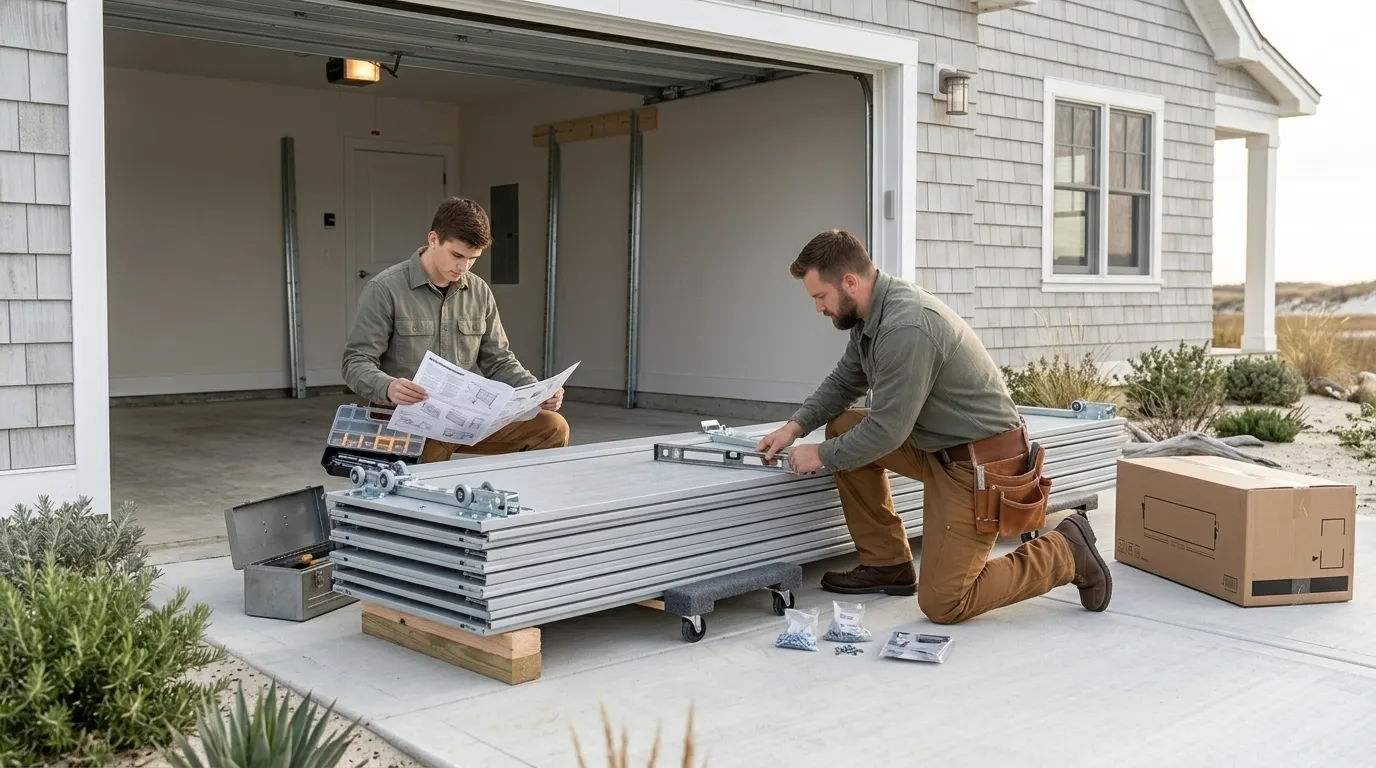
Garage Door Installation
New sectional doors sized and installed for the housing stock actually built in this area.
Learn more →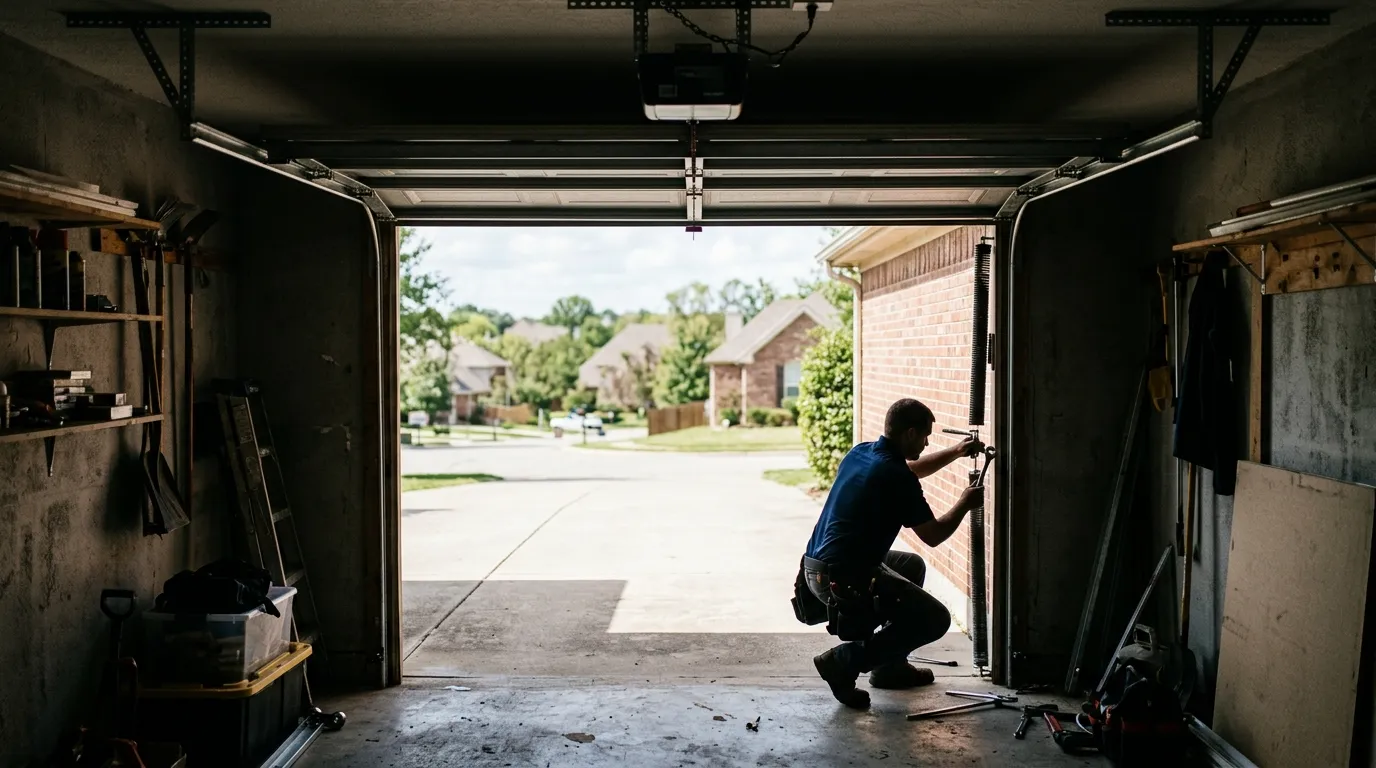
Garage Door Service
Tune-ups, lubrication, and safety checks that catch a small problem before it becomes a service call.
Learn more →Frequently Asked Questions
How do I know if my garage door is too old to fix?
Age alone doesn't tell you much. Check the springs for a visible break, press on the lower panels for soft spots from moisture, and sight down the track for a bow. If those check out and the door just needs a part, it's almost always worth fixing regardless of how old it is.
Does Hamilton's winter weather actually wear out garage doors faster?
Yes, in a specific way. The freeze-thaw cycling here puts repeated stress on torsion springs and seams, which is different from just cold stiffening the metal. A door that's seen decades of Hamilton winters often shows spring failure or track drift before the panels themselves give out.
My house was built in the 1970s, is the door original?
A lot of houses in this area were built in that window, and it's common to find an original door still in place with newer springs or an added opener. Check the panel gauge and hardware style against what's sold now; if it looks non-standard, that tells you the door predates current sizing.
Have a Door That Needs a Second Opinion?
Call and describe what it is doing - we will tell you what it likely is.