
Service
Garage Door Repair for Hamilton Homes
Garage door repair for Hamilton, OH homes built mostly between 1938 and 2004, where cold winters and original hardware combine to wear out springs and tracks early.
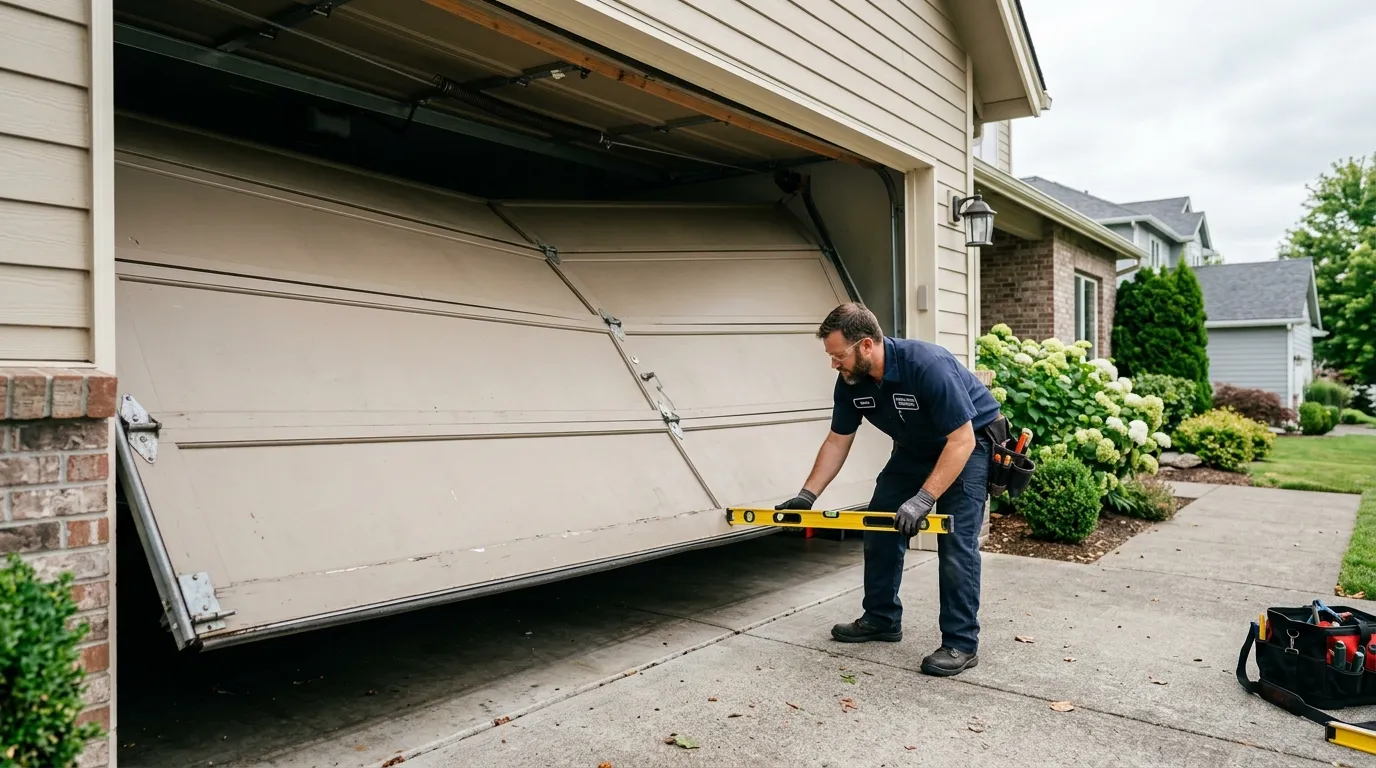
What Happens When You Call
-
1
Call or Request a Quote
Tell us what the door is doing and roughly how old the house is - that alone points us toward the likely part before a truck leaves.
-
2
On-Site Diagnosis
A tech checks the spring, cables, tracks, and opener in person and tells you plainly what is actually wrong.
-
3
Straight Price, No Surprises
You get a number before any work starts. It covers parts and labor, nothing added after the fact.
-
4
Fixed the Same Visit
Most repairs are done in one trip. If a part needs sourcing, we tell you that upfront instead of guessing.
Where This Job Goes Sideways
Most of the trouble we see starts small. A door that hesitates halfway up, a spring that looks fine until it isn't, a track bracket that's worked loose from thirty years of vibration. In Hamilton, the median house dates to 1972, and a lot of the stock here runs from 1938 clear through 2004 - which means we're dealing with everything from original hardware nobody makes parts for anymore to newer installs that were never adjusted for our winters.
The sideways part happens when someone tries to force a stuck door instead of calling it. A torsion spring under tension that's forced open with a pry bar or a car bumper doesn't fail quietly - it can put a cable off its drum or bend a track section that then needs full replacement instead of a spring swap. We've seen simple jobs turn into panel and track jobs because the door got worked while the spring was already going.
If your door is fighting you on the way up, that's the spring or the cable, not the opener. Chasing it with WD-40 and hope usually buys you a week, not a fix.
Why This Fails Locally
This isn't a generic wear-and-tear story - it's Hamilton's housing and Hamilton's winters working together. With so much of the local stock built in the 1960s and 70s, a large share of doors and openers are original or on their second cycle, and the steel tracks and torsion hardware from that era weren't built for the temperature swings a severe cold climate throws at them every winter.
Cold steel contracts. A torsion spring that's already fatigued from decades of cycling loses tension faster in a hard freeze, and a track that's slightly out of plumb - common in houses this age where the slab has settled - binds harder when the metal shrinks. That combination is why late fall and deep winter are when we get the most spring-failure calls across the area, not because people use their doors more, but because the hardware has less margin left to give.
Newer builds aren't exempt either. Some of the housing here dates as recently as 2004, and those doors run into the same cold-weather bind if the track was never shimmed for our climate to begin with. The fix depends on which decade your house falls into - that's the first thing we check, not the last.
Doing It Yourself
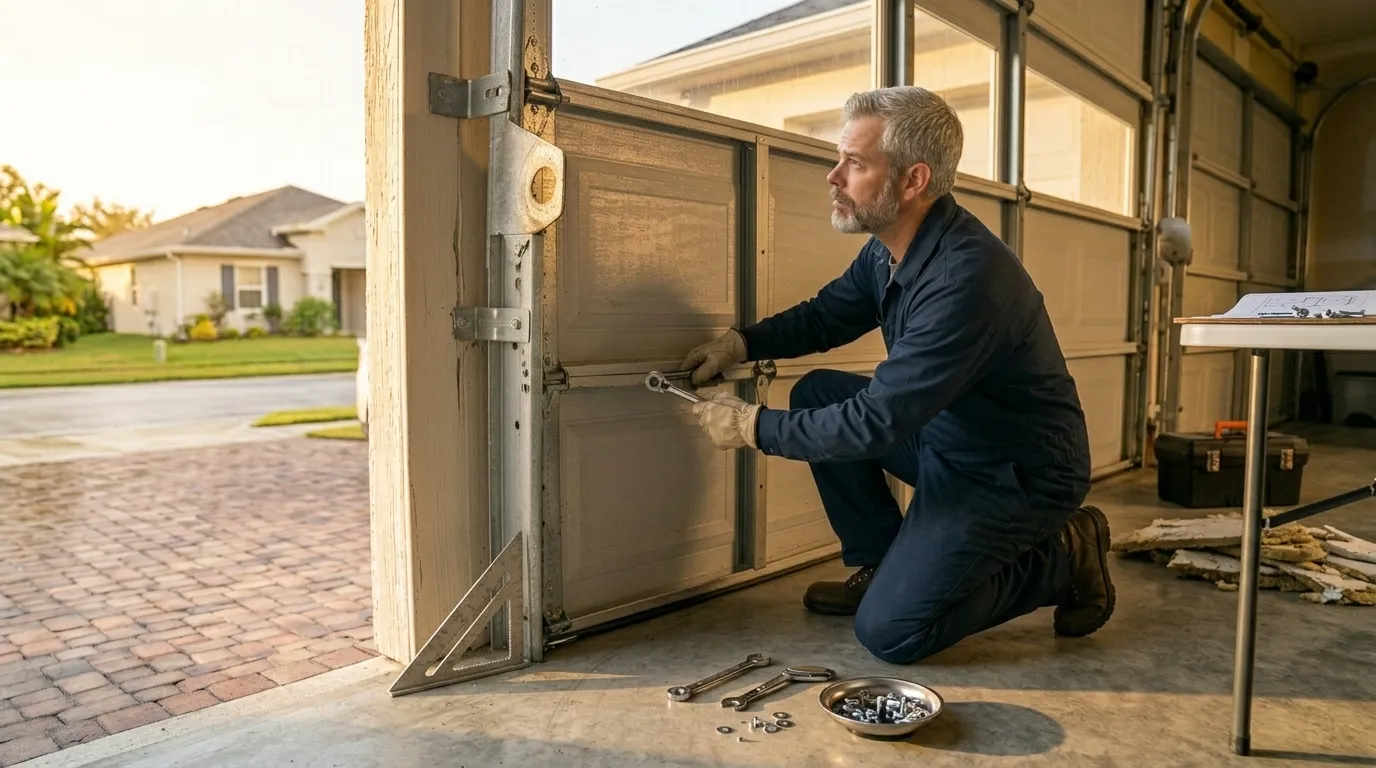
There's a real limit to what you should touch here. Lubricating hinges and rollers, checking that the track bolts are snug, clearing debris from the track - all fine, all worth doing twice a year in a climate like ours.
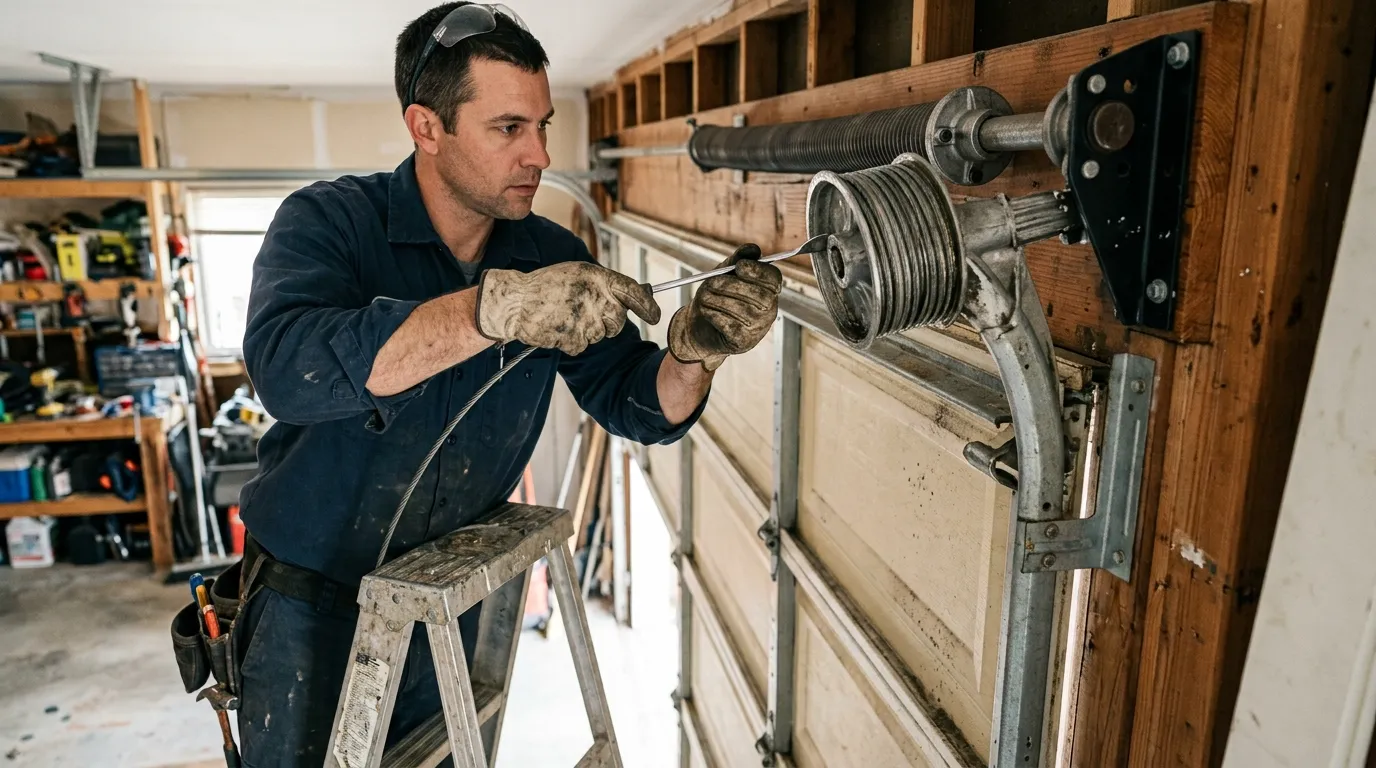
Replacing a torsion spring yourself is not something we'll walk you through, and it's not because we're protecting the job. A wound spring under full tension can put someone in the hospital, and the wind-up bars and cones needed to do it safely aren't something most garages have lying around.
Cables and drums are the same category. If a cable has frayed or come off the drum, that's a call, not a weekend project. What you can do yourself is diagnosis: watch how the door moves.
Does it drop suddenly partway down? Does one side lift before the other? Does it groan more in January than in July?
That last one is a real clue here - a door that's fine in warm months and rough in the cold is telling you the spring tension has drifted with the temperature, and it's worth having checked before it snaps rather than after.
What You Are Seeing
A door that's heavy to lift by hand, or that the opener strains against, usually means the torsion spring has lost tension - common on the older end of Hamilton's housing stock where the original spring has never been swapped. A door that jerks or shudders partway through its travel often points to a bent track or a roller that's worn out of round, and on houses from the 1960s and 70s that's frequently the original track, never replaced.
A door that reverses right after touching the floor, or won't close at all, is often a sensor alignment issue rather than a mechanical one - those get knocked out of true easily and are usually a quick fix. If you're hearing a loud bang followed by the door refusing to move, that's almost always a broken spring, and at that point the door should not be operated until it's looked at.
We won't guess at what's wrong over the phone beyond narrowing it to spring, track, cable, or opener - the difference between a $150 fix and a full replacement is something we need eyes on, not something we'll promise sight unseen.
Talk to a Technician Before You Book
Describe what the door is doing and get a straight answer on what it likely needs.
Other Ways We Can Help
Jobs Like Yours
Recent work from this service line.
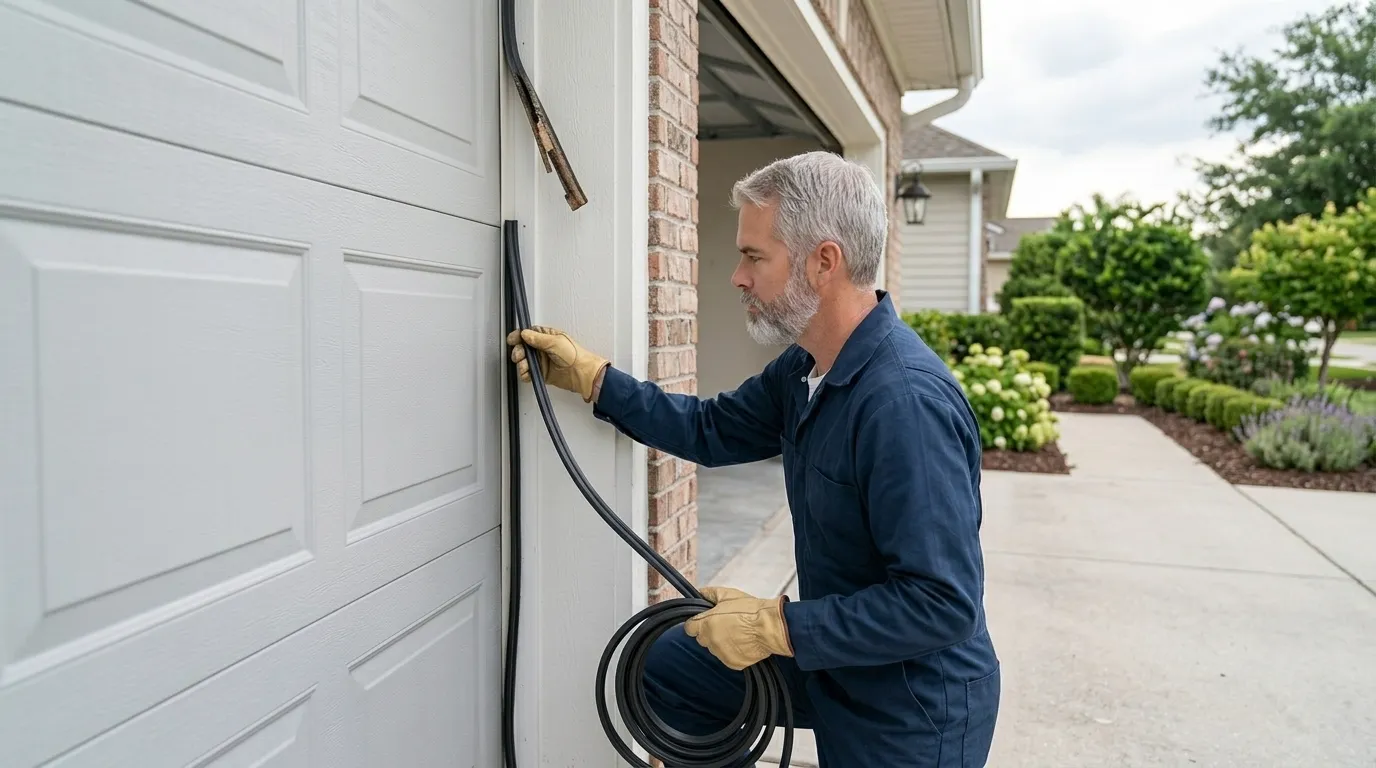
Why Hamilton Calls Us
Frequently Asked Questions
Why do garage door springs fail more in winter here?
Hamilton sits in a severe cold climate band, and a torsion spring that's already fatigued loses tension faster when steel contracts in a hard freeze. Combine that with a lot of local housing dating to the 1960s and 70s, where original springs are still in service, and winter is when the weakest ones finally give out.
My house was built in the 2000s - why is my door still having problems?
Housing here spans 1938 to 2004, so even newer builds are two decades old now. If the track was never adjusted for cold-weather contraction, or the opener's force settings were never revisited, age catches up with newer installs too, just later than it does with 1960s stock.
Can I replace a torsion spring myself to save money?
We don't recommend it. A wound torsion spring holds enough stored tension to cause serious injury, and the tools to do it safely aren't standard homeowner gear. Diagnosing the problem yourself is fine - swapping the spring is where we ask you to call instead.
Is a bent track always a full replacement?
Not always, but often. A track bent from forcing a stuck door, or worn from decades of cycling on an original 1960s or 70s install, usually needs to be replaced rather than hammered back into shape, since a reshaped track rarely runs true again.
Need Garage Door Repair for Hamilton Homes?
Call now for straight answers on cost and timing.