
Hamilton Garage Door Guide
When a Garage Door Slips Its Track in Hamilton
In Hamilton, OH, garage doors built on 1960s-70s hardware jump their track when severe cold winters make old steel track brittle. Here's why, what to check.
What You Pay
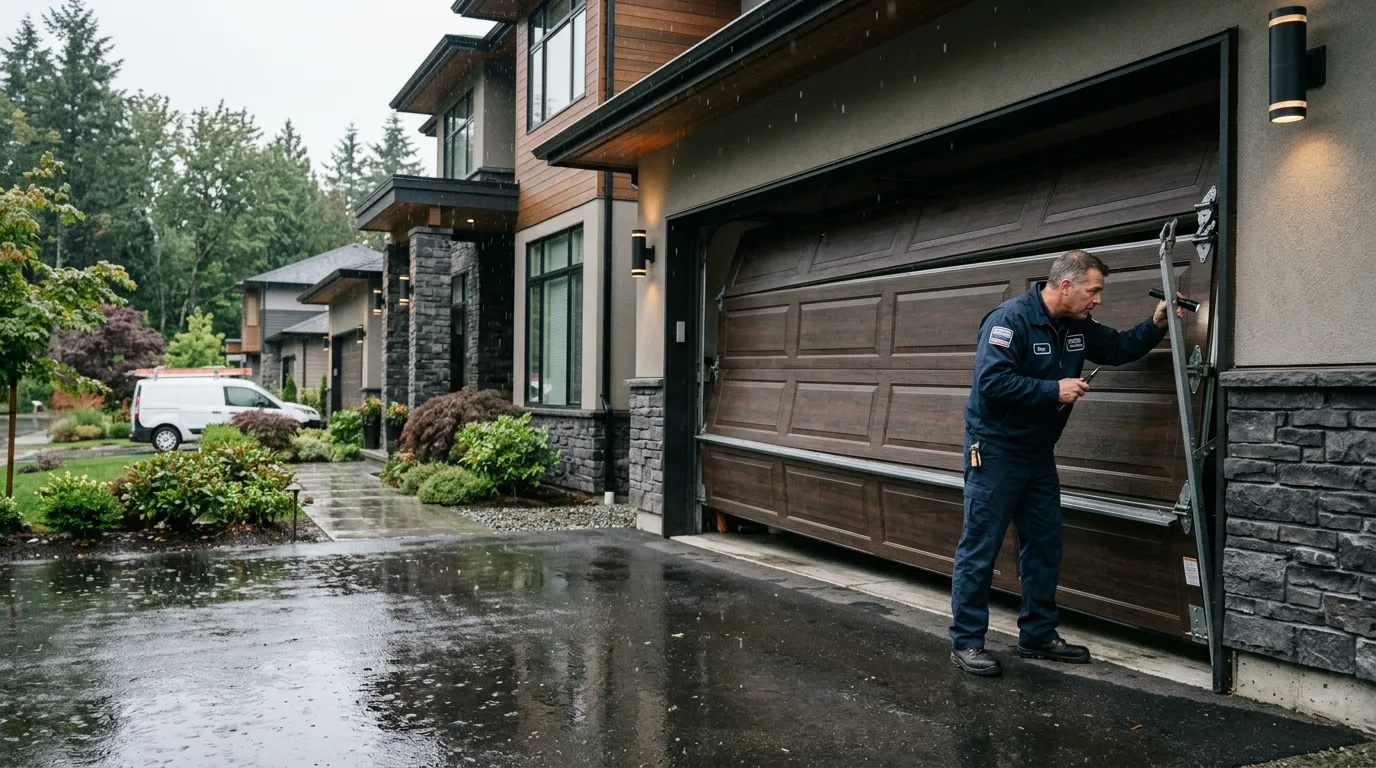
We're not going to hand you a number here, because a door off its track can mean three different jobs, and they don't cost the same. Sometimes it's one roller that's worn round and popped the lip of the track - a fifteen-minute fix. Sometimes the track itself is bent, usually from a car bumper tap or a slipped ladder, and the whole rail on one side needs replacing.
And sometimes the door came off because a cable let go or a spring gave out, which is a different job with different parts and different risk - that one you don't want to touch yourself. We price a door off track after we look at it, not before, because guessing over the phone means either lowballing you or padding the number to cover ourselves. What we can tell you: on the 1960s and 70s builds common through this area, it's almost always rollers or track, not the opener.
Call and we'll tell you which one it is before we touch anything.
The Problem
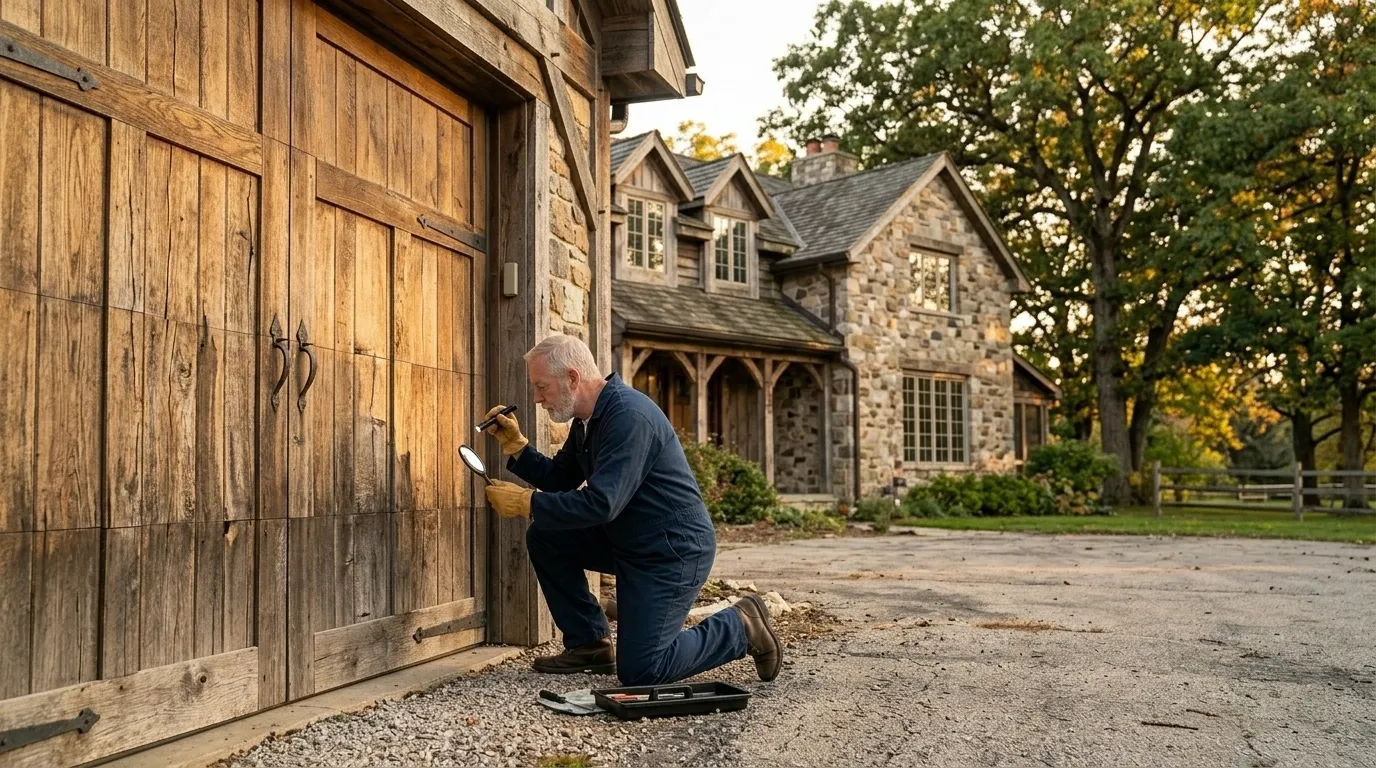
Housing in and around Hamilton mostly went up between 1938 and 2004, with the median sitting around 1972 and the bulk of it - across the 55 communities we work in - built through the 1960s and 70s. That matters here specifically because doors from that era ride on plain steel track, thinner gauge than what's sold now, hung with hardware that was standard for the time and isn't stocked new anymore. Steel track that age has usually taken forty-plus years of small hits: a bike, a bumper, a shovel handle.
Each one bends the rail a fraction of a degree. The door doesn't come off the first time, or the tenth. It comes off the time the roller finally rides up over a lip that's grown just a little too shallow to hold it.
That's the pattern we see on original hardware - not a sudden failure, a slow one that ends suddenly. Newer doors on galvanized track flex back into shape more often than they bend permanently, which is part of why this is more of an issue on the older stock than on anything built in the last twenty years.
Checking It Yourself
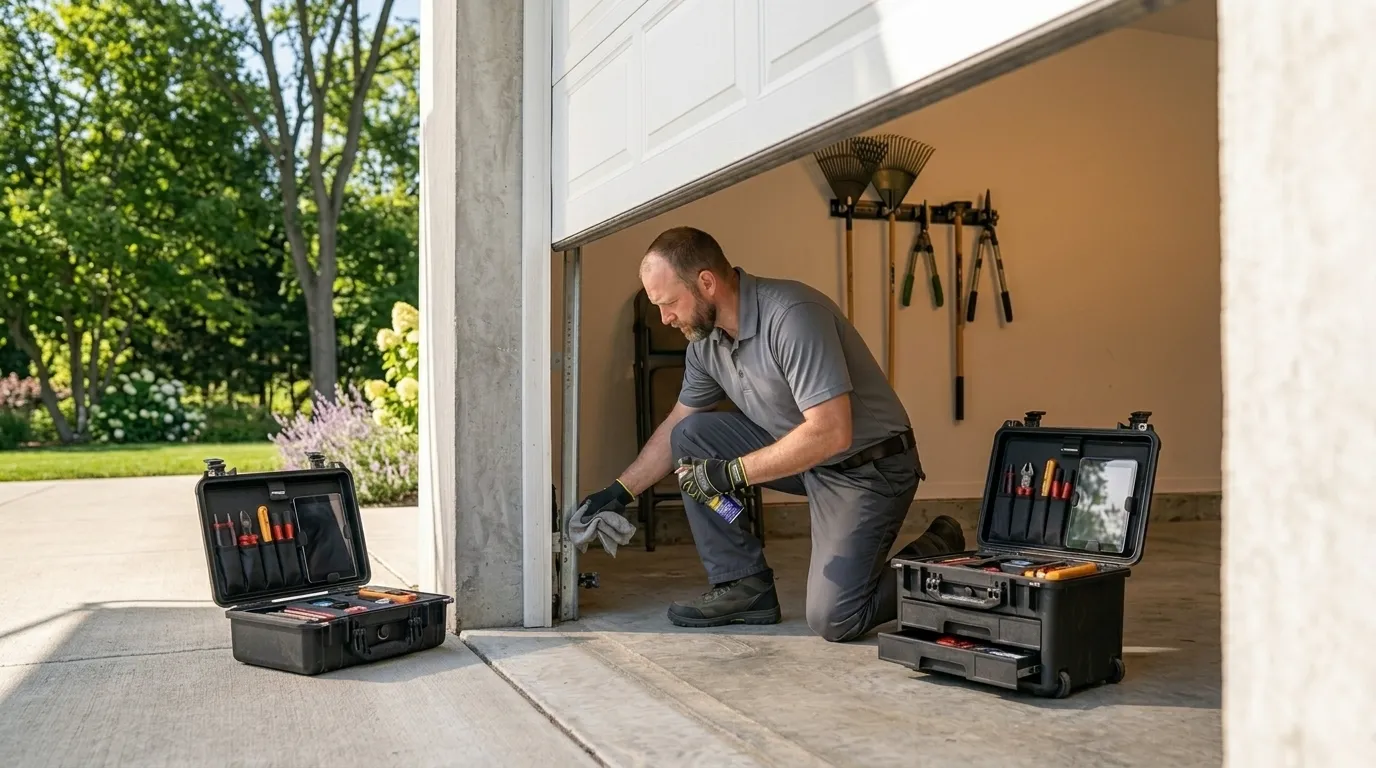
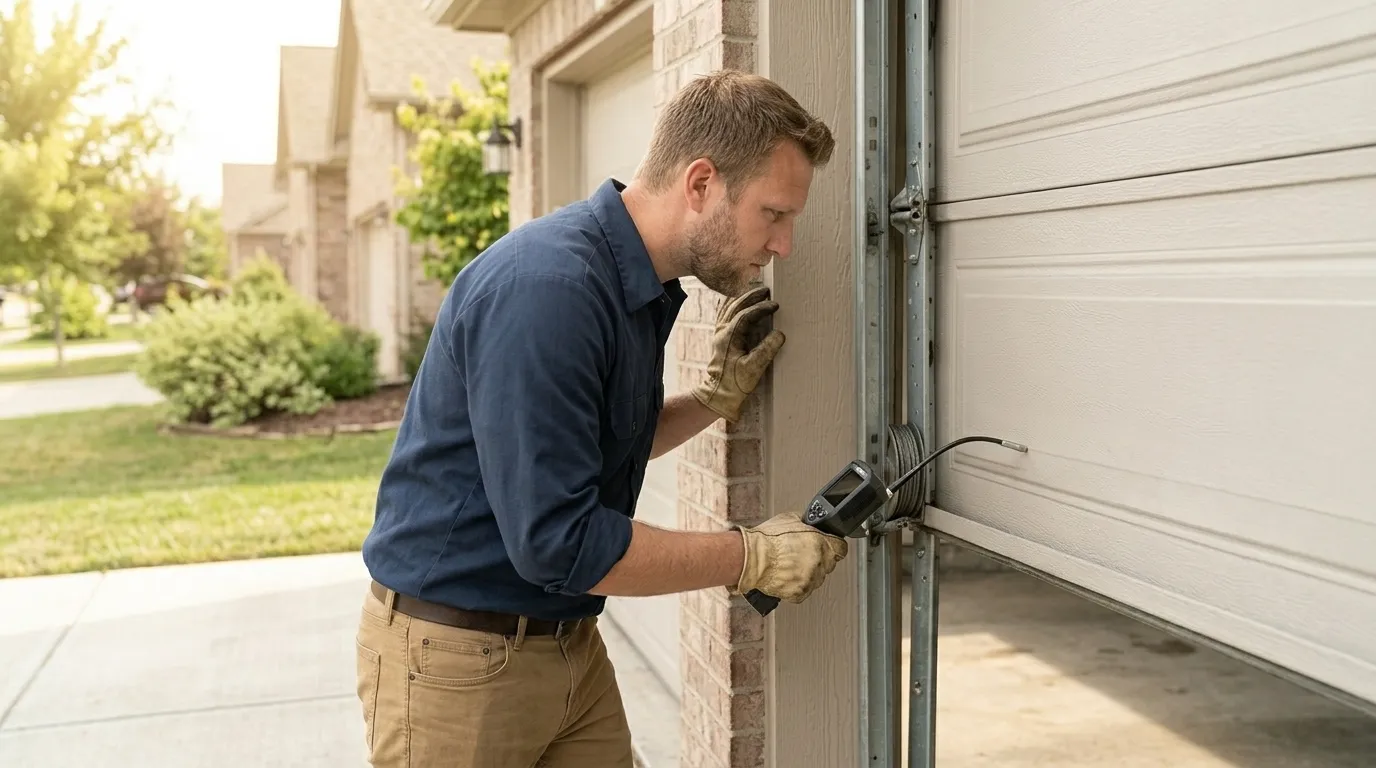
Before you call anyone, look at the track on both sides of the door with the door down. Stand back a few feet - a bent section usually shows as a visible kink or a spot where the rail isn't running dead straight against the wall. Run your hand along it (door closed, opener unplugged) and feel for a lip that's flattened out where a roller rides.
Check the rollers themselves: if they're the original steel wheels rather than nylon, and one looks flat-sided or chipped, that's your likely cause. Look at the horizontal track up near the ceiling too - that section carries the weight when the door is open, and on an older track it's the spot most likely to have sagged. If you see the door leaning to one side when it's open, don't run it up and down trying to test it - that's how a door that's barely hanging on comes down the rest of the way.
Note what you find and stop there. Diagnosing a bent track from the ground is fine. Straightening or replacing one is not a job to learn on your own door.
What Local Conditions Do
Hamilton sits in a climate band the federal data marks as cold and severe, and that matters for a door that's already on old track. Steel contracts in a hard freeze. On a rail that's already got a slight bend in it from decades of small impacts, that contraction is sometimes enough to pull a roller past a lip it was clearing fine in warmer months - which is why off-track calls cluster in the coldest stretches of winter.
Condensation is the other half of it: a garage that swings from near-freezing to slightly warmer during the day gets moisture on the track, and moisture on old steel means rust building up right where the roller needs a clean surface to ride. That rust adds friction, the door labors a little more each cycle, and eventually something gives at the weak point - usually the same worn roller or bent section you'd have found checking it yourself. Across the owner-occupied houses in this area, the ones built before 1980 are consistently the ones we get called out to in January and February, not because the door is new, but because the track under it isn't.
How We Can Help
Garage Door Repair
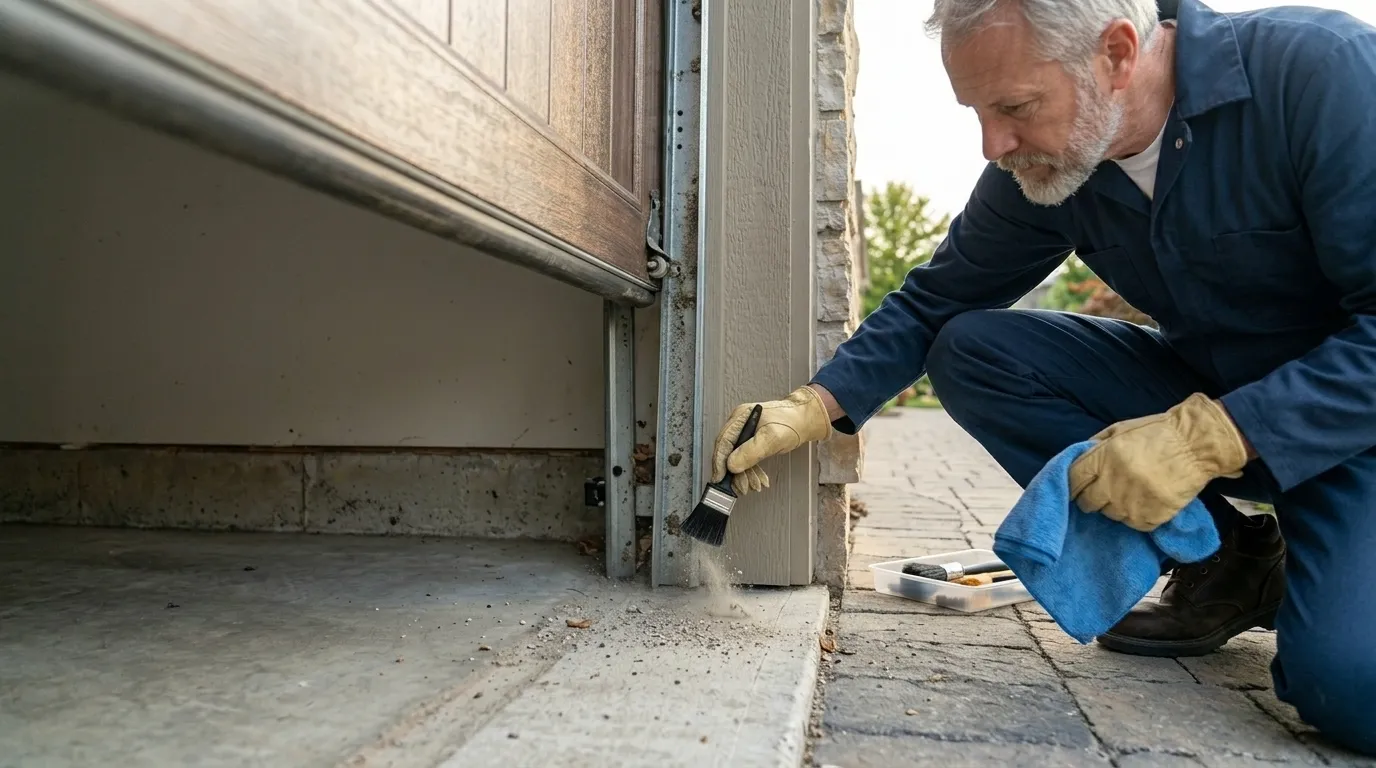
Springs, cables, tracks, rollers, and openers fixed by a tech who explains the problem before touching anything.
Learn more →
Garage Door Installation
New sectional doors sized and installed for the housing stock actually built in this area.
Learn more →
Garage Door Service
Tune-ups, lubrication, and safety checks that catch a small problem before it becomes a service call.
Learn more →Frequently Asked Questions
Can I put the door back on the track myself?
If it's just a roller that popped out and the door is otherwise hanging square, sometimes yes - with the opener unplugged and the door supported. But if a cable has slipped or a spring looks stretched or uneven, don't try it. Those store enough force to cause a real injury, and it's a call, not a DIY job.
Why does this happen more in winter?
Cold contracts steel track just enough to change the clearance a roller needs, and on track that's already slightly bent from age, that small change is sometimes the difference between riding smooth and jumping the lip. It's not the cold alone - it's cold acting on hardware that's already worn.
Is a bent track worth fixing or should I replace the whole door?
Depends what else is going on. If it's one section of track and the rest of the door - panels, springs, opener - is sound, replacing the track section is the cheaper move. If the door itself is original from the 60s or 70s and other parts are wearing out too, it's worth having us look at the whole picture before you spend on just the track.
How do I know if it's the roller or the track that's bad?
Roll the door up and down slowly by hand with the opener unplugged and watch where it hesitates or grinds. A single sticking point usually means one bad roller. A rail that visibly isn't straight, or a door that binds along its whole travel, points to the track itself.
Have a Door That Needs a Second Opinion?
Call and describe what it is doing - we will tell you what it likely is.