
Service
Garage Door Service Calls in Hamilton, OH: What Usually Breaks and Why
Hamilton homes built between 1938 and 1972 hit garage door trouble in patterns tied to their age and Ohio's cold winters. Here's what we actually find on the call.
What Happens When You Call
-
1
Call or Request a Quote
Tell us what the door is doing and roughly how old the house is - that alone points us toward the likely part before a truck leaves.
-
2
On-Site Diagnosis
A tech checks the spring, cables, tracks, and opener in person and tells you plainly what is actually wrong.
-
3
Straight Price, No Surprises
You get a number before any work starts. It covers parts and labor, nothing added after the fact.
-
4
Fixed the Same Visit
Most repairs are done in one trip. If a part needs sourcing, we tell you that upfront instead of guessing.
Where This Job Goes Sideways
Most service calls in Hamilton start the same way: a door that worked fine last week and now grinds, sticks, or won't move at all. The pattern we see has a lot to do with when the house went up. Housing across this service area runs from 1938 to 2004, with the median build year sitting around 1972, and most of the 55 named areas we work in are dominated by 1960s and 70s stock.
That means original hardware is old enough to have been replaced once already by someone who didn't necessarily match the door to the opener, or old enough that nobody's touched it since it left the factory. Either way, a routine call turns into three problems stacked on top of each other: a worn spring, a track bent from decades of small hits, and an opener sized for a lighter door than the one currently hanging on it. We don't guess at this from a truck outside.
We look at the panel gauge, the spring wire diameter, and the drum before we quote anything, because on a house this age the visible symptom is rarely the actual fault.

Why This Fails Locally
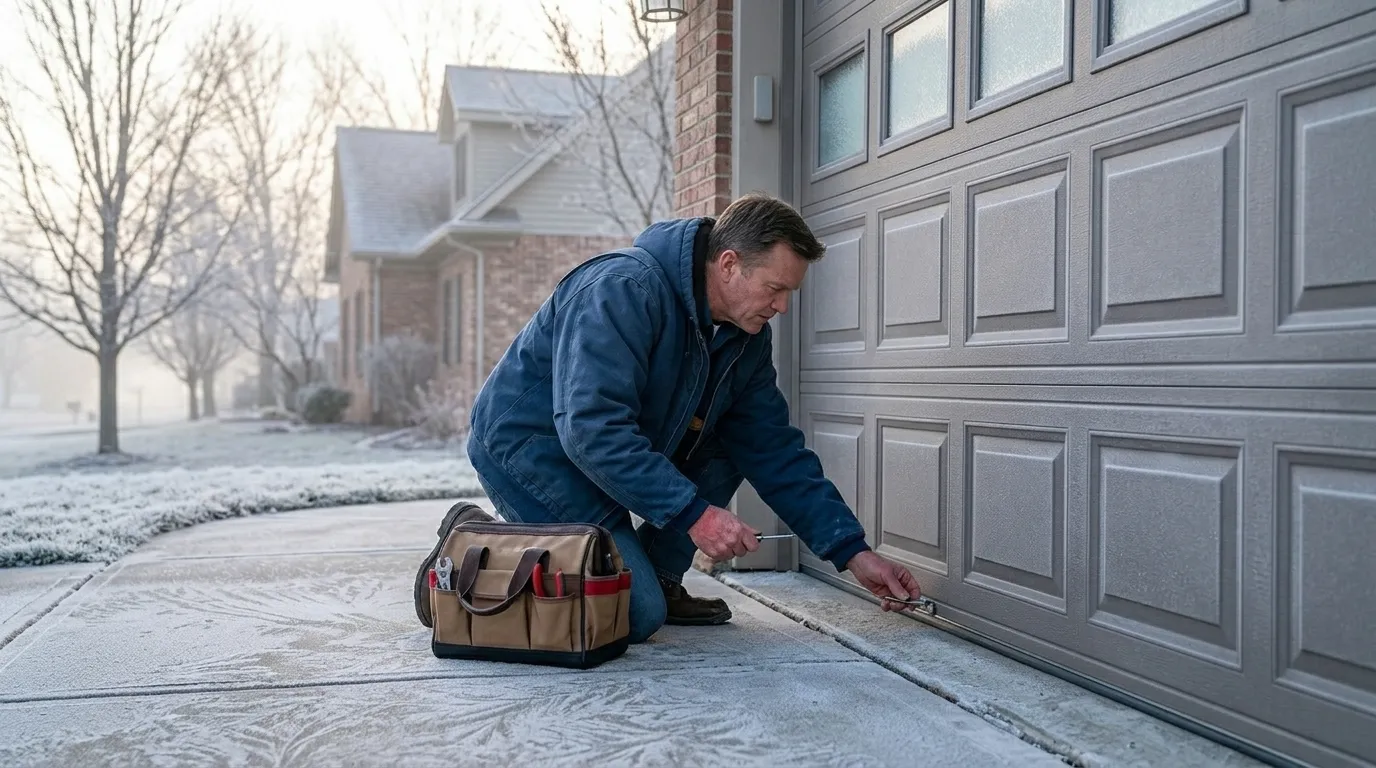
Ohio's winters are the other half of it. This area sits in a cold, severe climate band, and steel contracts hard when the temperature drops overnight. On a door with a torsion spring that's already fatigued from thirty-plus years of cycles, a cold snap is often what finally snaps it, not the door itself getting weaker on that particular day.
Nylon rollers stiffen up too, so a door that rolled quiet in August starts grinding in January even with nothing mechanically new wrong. Lubricant that was fine for a mild fall thickens in cold garages and stops doing its job right when the door needs it most. We see this same failure timing across the towns near Hamilton - Fairfield, Seven Mile, Pleasant Run - because the housing age and the weather pattern are shared across the region, not unique to one street.
It's not bad luck that your spring went in February. It's the math of an old spring meeting a cold morning.
Doing It Yourself
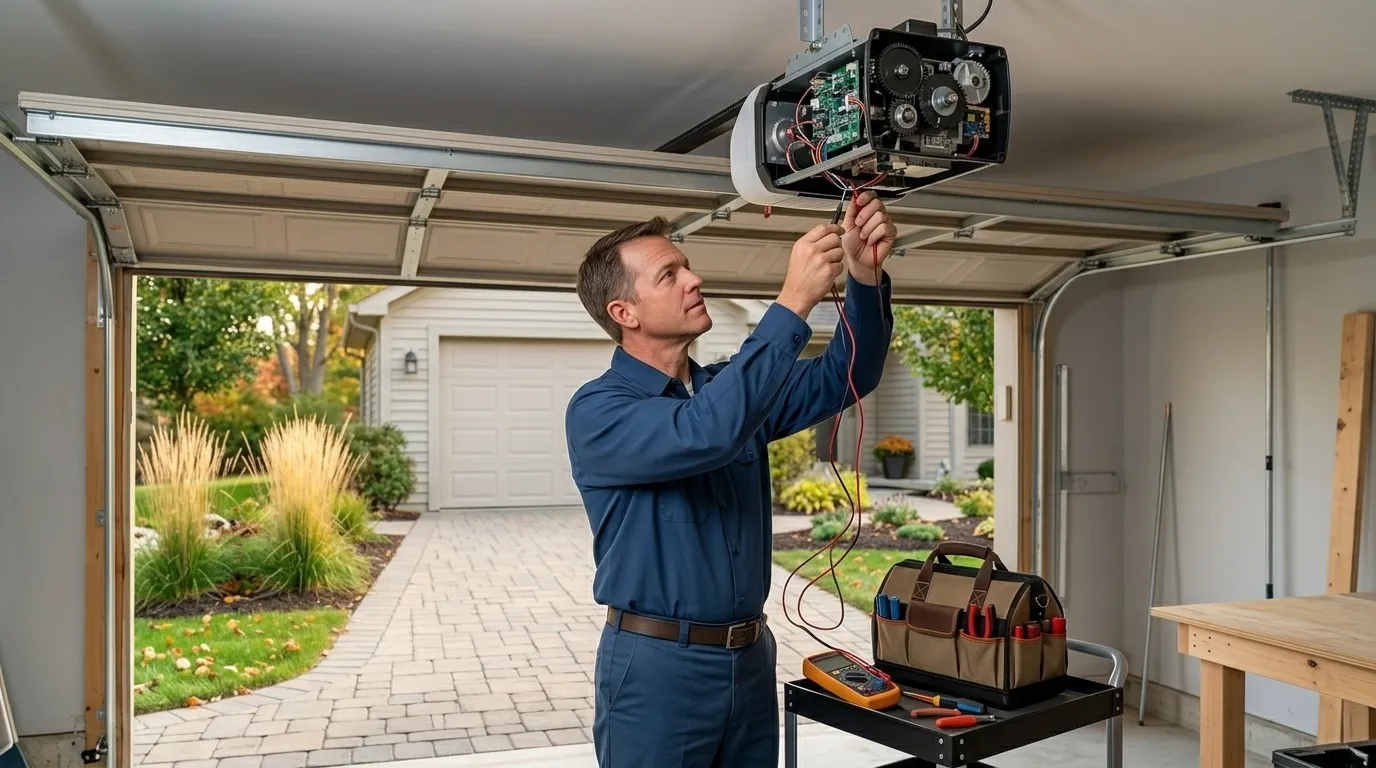
There's a limit to what you should touch yourself, and we'll say it plainly: don't put your hands near a loaded torsion spring. The tension stored in that coil can break fingers or worse, and it's not a skill you pick up from a video in an afternoon. What you can reasonably do yourself is a visual check - look at the springs for gaps in the coil, check that the cables aren't frayed at the drum, and listen for grinding versus a clean roll when the door moves.
If the door is off track or the spring is visibly broken, that's a call, not a project. One honest limit on our end: if your door and opener are mismatched in weight class, sometimes the fix isn't a spring swap, it's a heavier spring plus a stronger opener, and we'll tell you that rather than patch a system that'll fail again in six months.
What You Are Seeing
A door that reverses before it hits the floor is usually a sensor alignment issue or a spring losing tension, not a broken opener. A door that's noticeably heavier to lift by hand than it used to be is a spring problem, full stop - the opener isn't meant to carry that load alone. Grinding at one specific spot in the travel means a flat spot on a roller or a bent section of track, and it'll get worse, not better, if you keep running it.
A door that opens fine but closes crooked is almost always a cable or a track alignment problem on one side. None of these show up the same way on a house built in 2004 versus one built in the 1950s, because the hardware generation is different - which is exactly why we ask the build year before we ask what's wrong.
Talk to a Technician Before You Book
Describe what the door is doing and get a straight answer on what it likely needs.
Other Ways We Can Help
Jobs Like Yours
Recent work from this service line.
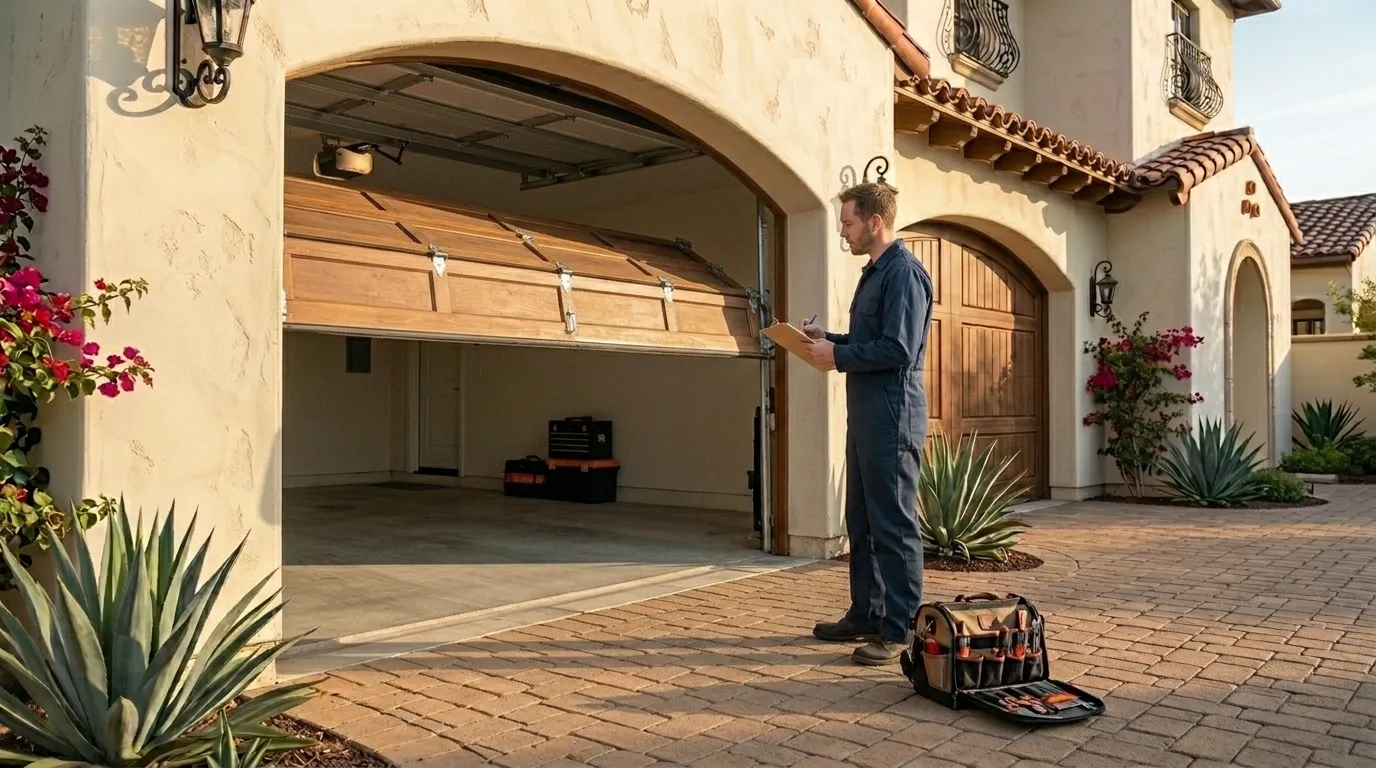
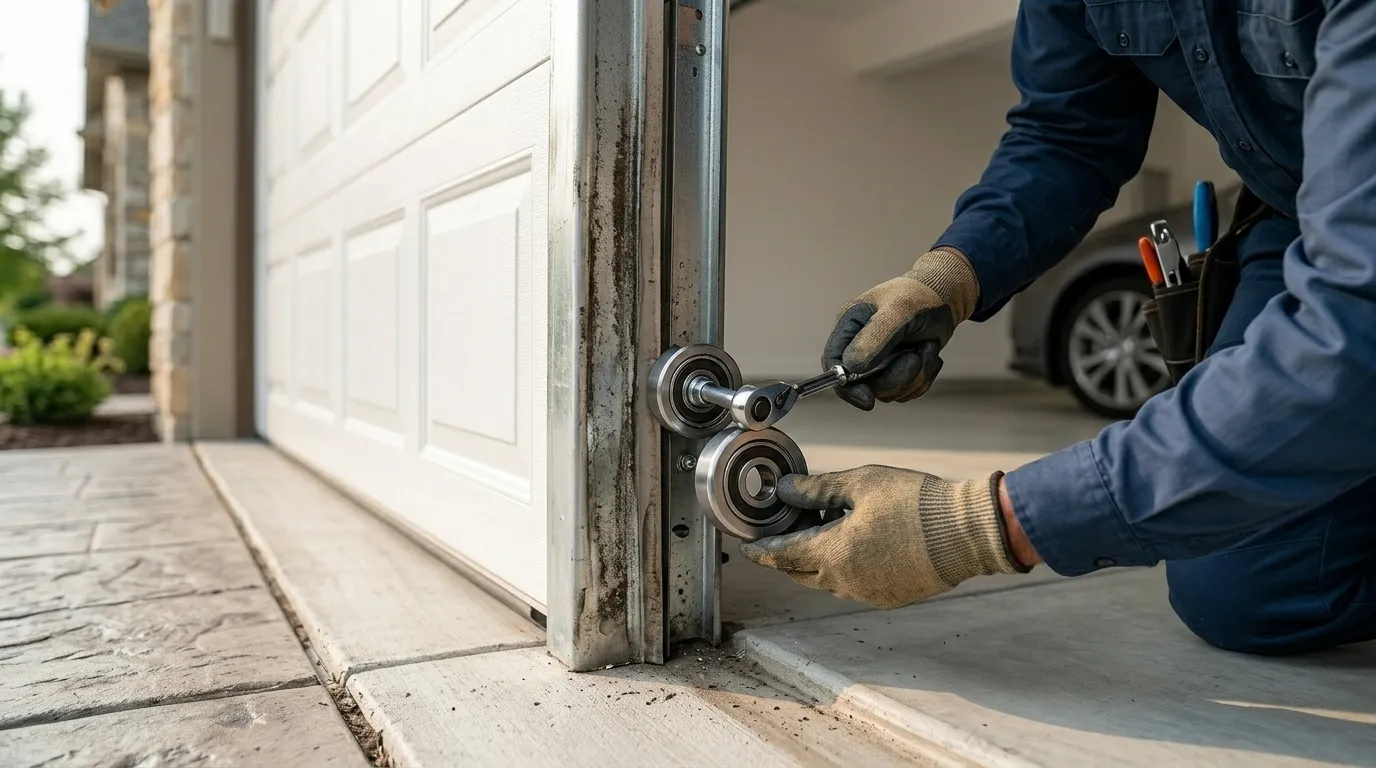
Why Hamilton Calls Us
Frequently Asked Questions
Why did my garage door spring break in the middle of winter?
Cold makes steel more brittle, and a spring that's already fatigued from years of cycling is more likely to give out on a cold morning than a mild one. In this area's cold, severe climate, that timing is common on doors installed decades ago rather than a sign of something new going wrong.
Is my garage door old enough that parts are hard to find?
It depends on the door. Housing in this area was mostly built between the 1960s and the early 2000s, and older doors sometimes have hardware sized differently than what's stocked today. We check the spring wire size and drum before quoting so we're not guessing on parts.
Can I replace a garage door spring myself?
We'd rather you didn't. A torsion spring holds enough tension to cause a serious injury if it lets go while you're working on it. Checking for a broken coil or listening for grinding is fine to do yourself - the actual spring swap isn't a DIY job.
Why is my door heavier to lift than it used to be?
That's almost always a spring losing tension over time, not the opener wearing out. The opener is designed to assist a properly sprung door, not carry a load it was never built for, so a heavy door by hand means the spring needs attention.
Need Garage Door Service Calls in Hamilton, OH: What Usually Breaks and Why?
Call now for straight answers on cost and timing.