
Hamilton Garage Door Guide
What a Technician Checks First on a Hamilton Garage Door
A Hamilton Garage Door Pros technician's first-check routine, built around Hamilton's 1938-2004 housing stock and the cold-climate wear that hits torsion springs and tracks here.
What You Pay
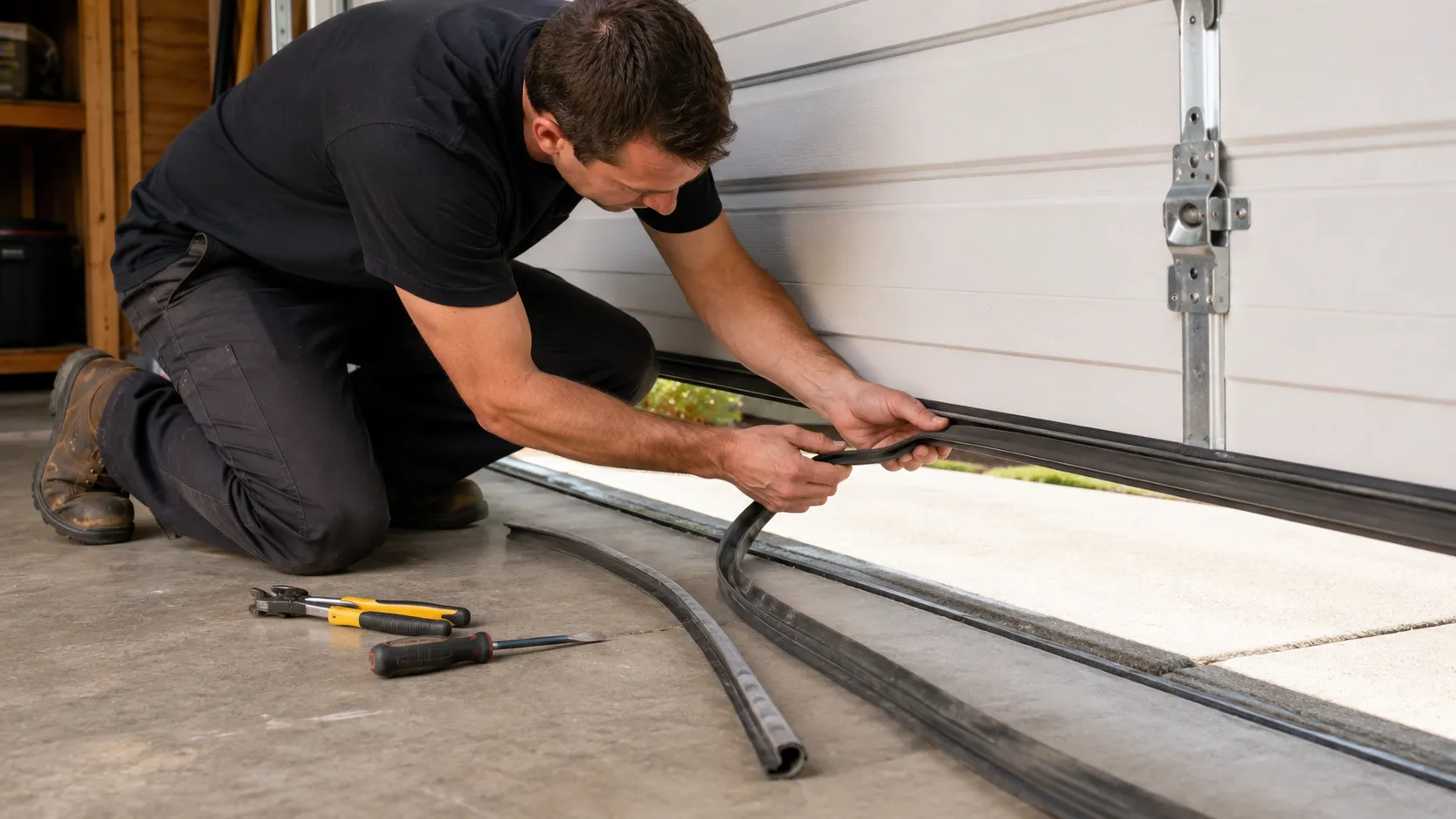
We don't quote a number here, because what a Hamilton job costs depends on what's actually wrong, and that varies more than most homeowners expect on a street where houses were built anywhere from 1938 to 2004. A house from the 1960s median-era stock usually needs different parts than a house from the early 2000s end of that range - different spring sizing, different track gauge, sometimes a whole different opener mount. What we can tell you is that the first visit is a diagnosis, not a guess.
A tech opens the panel housing, checks the spring wind, and looks at the track alignment before anyone talks numbers. If the fix is a fifteen-minute cable adjustment, you're not paying for a new opener. If the drum is chewed up, replacement parts get quoted honestly, not padded to cover a truck roll that should've been cheaper.
The Problem
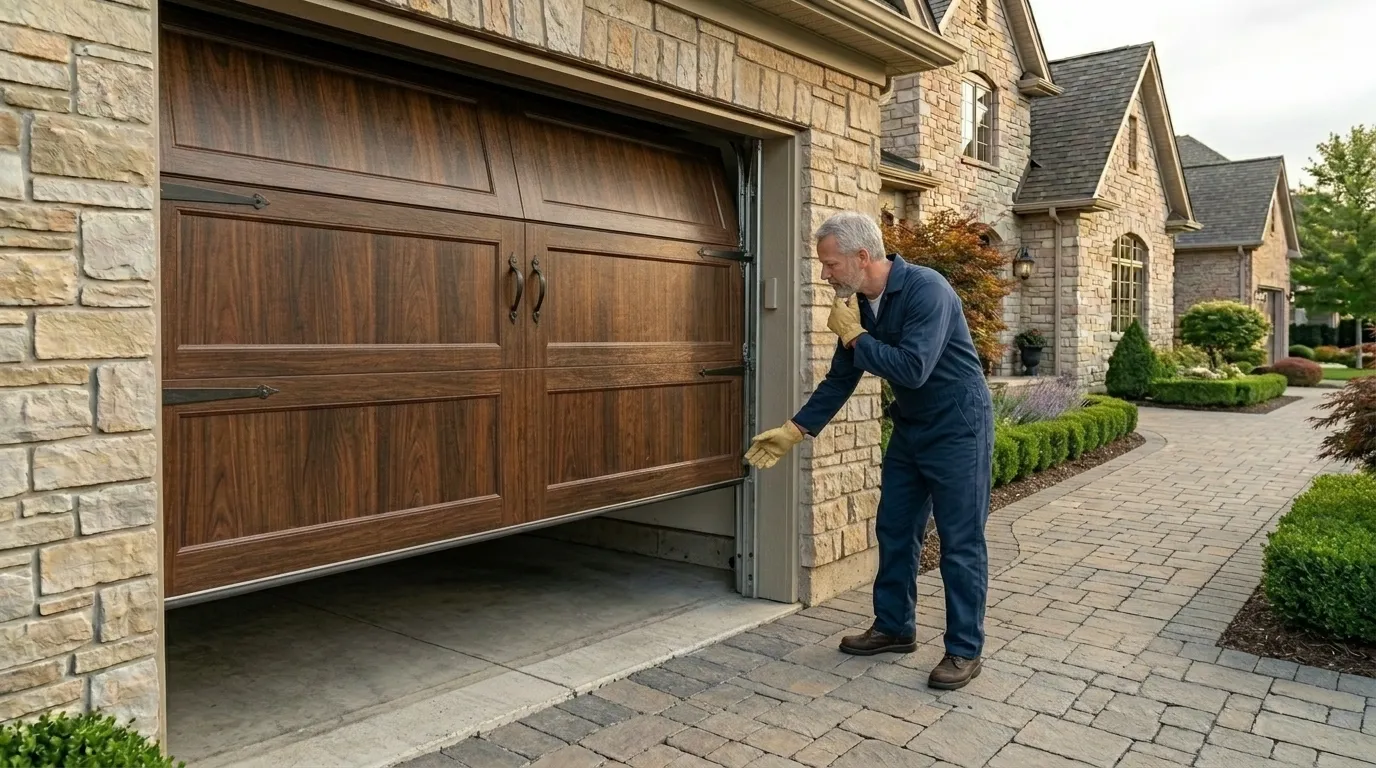
Most of the doors we get called on in Hamilton and the surrounding named areas - Fairfield, Seven Mile, Pleasant Run, Ross - sit on hardware that matches the mostly 1960s-70s housing stock across this service area. That means galvanized torsion springs and steel tracks that have already done fifty-plus winters of expansion and contraction. Cold-band winters here don't just stiffen grease - they shrink metal fractionally every night and let it expand every afternoon, and that cycle fatigues spring coils and loosens track bolts faster than a moderate climate would.
On a door built to a 1970s spec, the failure point is almost always the spring or the bottom bracket, not the opener. The opener gets blamed because it's the thing making noise when it strains against a spring that's already lost half its tension. That's the pattern we see on this side of the region more than any single-cause story about a bad remote or a worn belt.
Checking It Yourself
Before you call anyone, pull the release cord and lift the door by hand. If it's balanced, it should stay wherever you leave it, roughly waist height. If it drops on its own or feels like it's fighting you, that's a spring problem, not an opener problem, and no amount of opener troubleshooting fixes it.
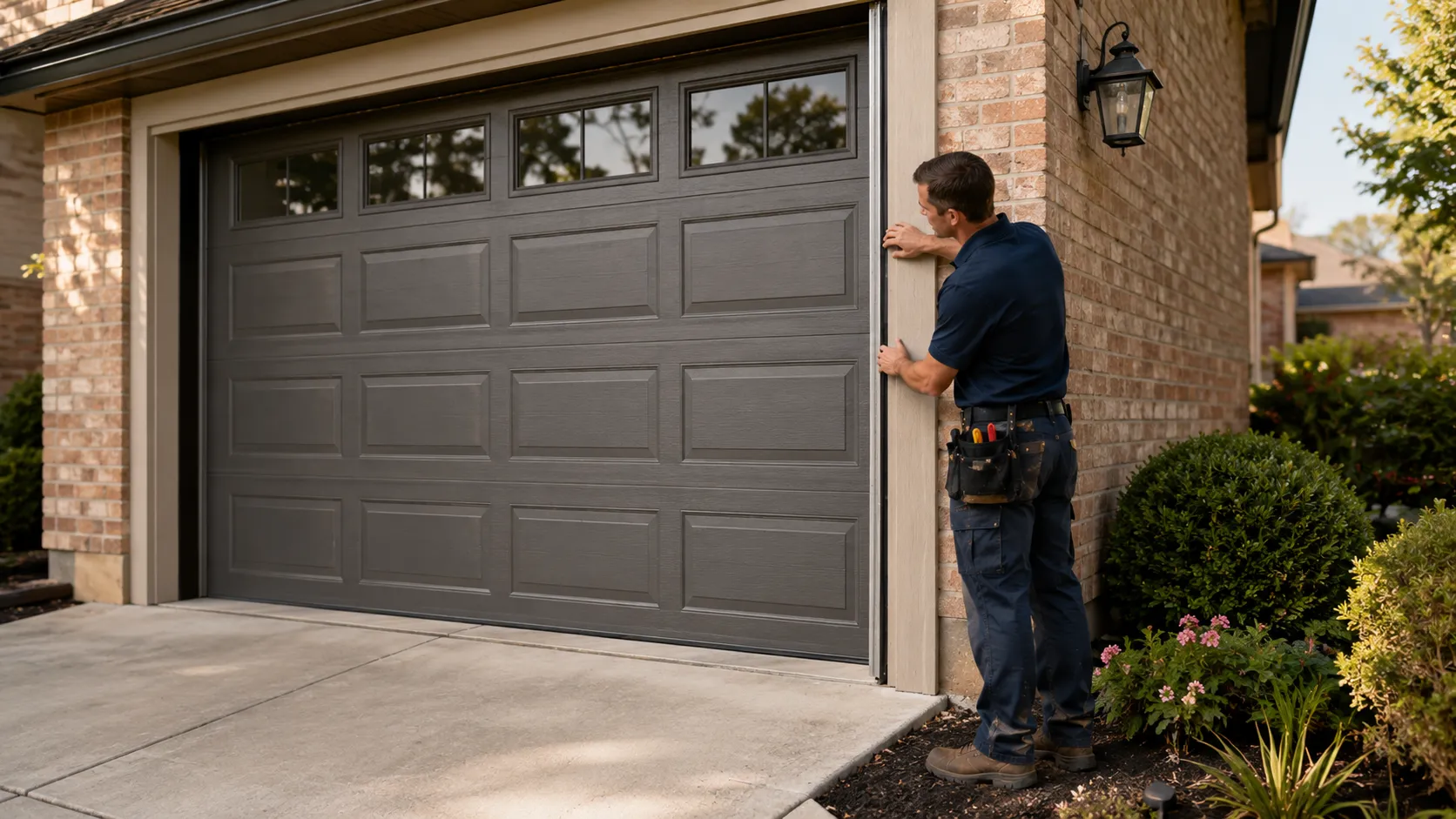
Next, look at the track brackets where they bolt to the frame - on houses from the older end of Hamilton's 1938-2004 build range, those brackets have had decades of seasonal movement to work loose. A quarter-inch of horizontal play at the bracket is normal wear; more than that and the door is riding crooked, which chews rollers fast. Last, in winter, check whether the door feels heavier in the morning than the afternoon.
That's a real symptom in this climate band, not something you're imagining, and it usually points to the spring losing tension in the cold before it recovers slightly as things warm.
What Local Conditions Do
The cold-severe band this area sits in doesn't ruin a door in one storm. It does it in cycles - freeze, thaw, freeze again - and each cycle asks a little more of the spring steel and the weatherstripping than the last. Combine that with a housing stock whose median year is 1972, and you've got a lot of original or first-replacement hardware that was never rated for the number of freeze-thaw cycles it's now seen.
We're not going to tell you every door here is on its last legs; plenty of 1972-era doors are fine because someone replaced the spring once already. But if yours has never had that service, cold-season failure isn't random bad luck, it's the expected outcome of this specific climate acting on this specific age of hardware.
How We Can Help
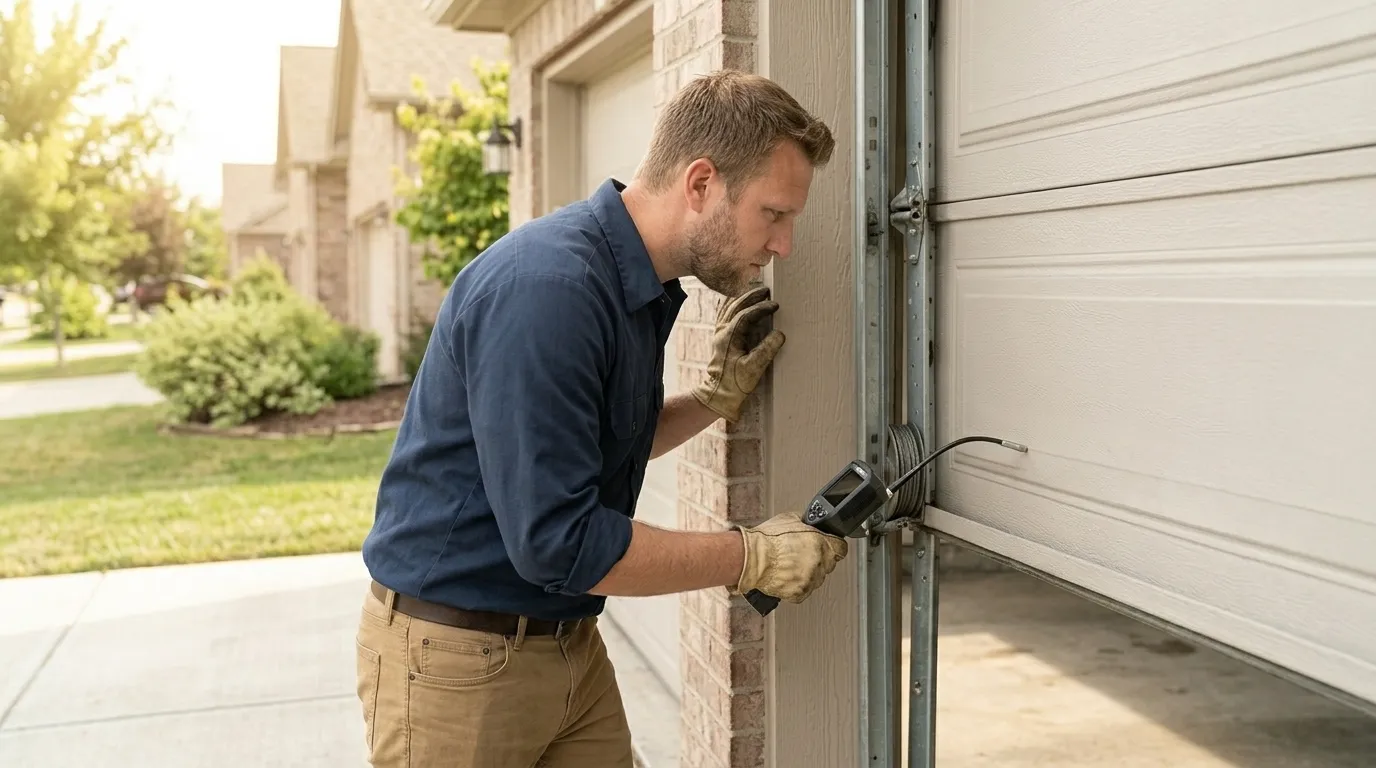
Garage Door Repair
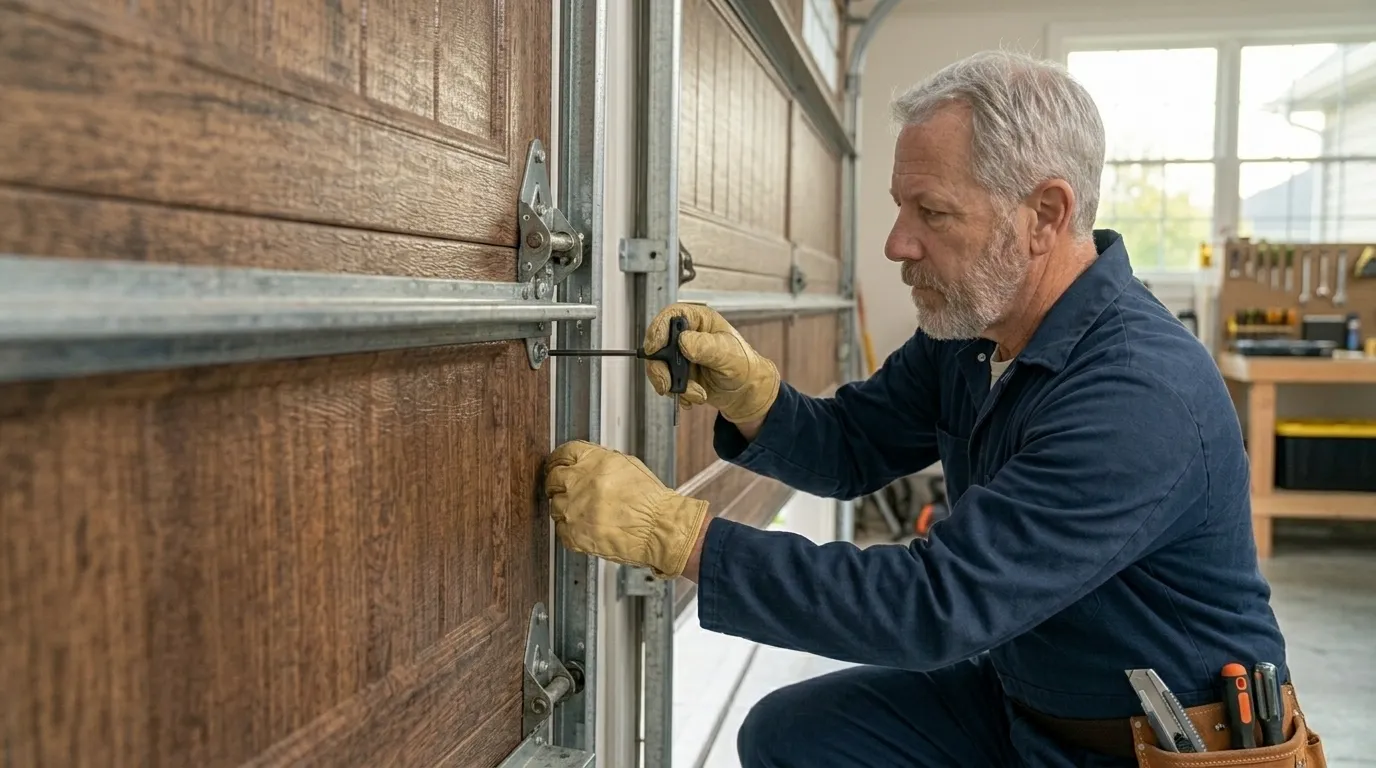
Springs, cables, tracks, rollers, and openers fixed by a tech who explains the problem before touching anything.
Learn more →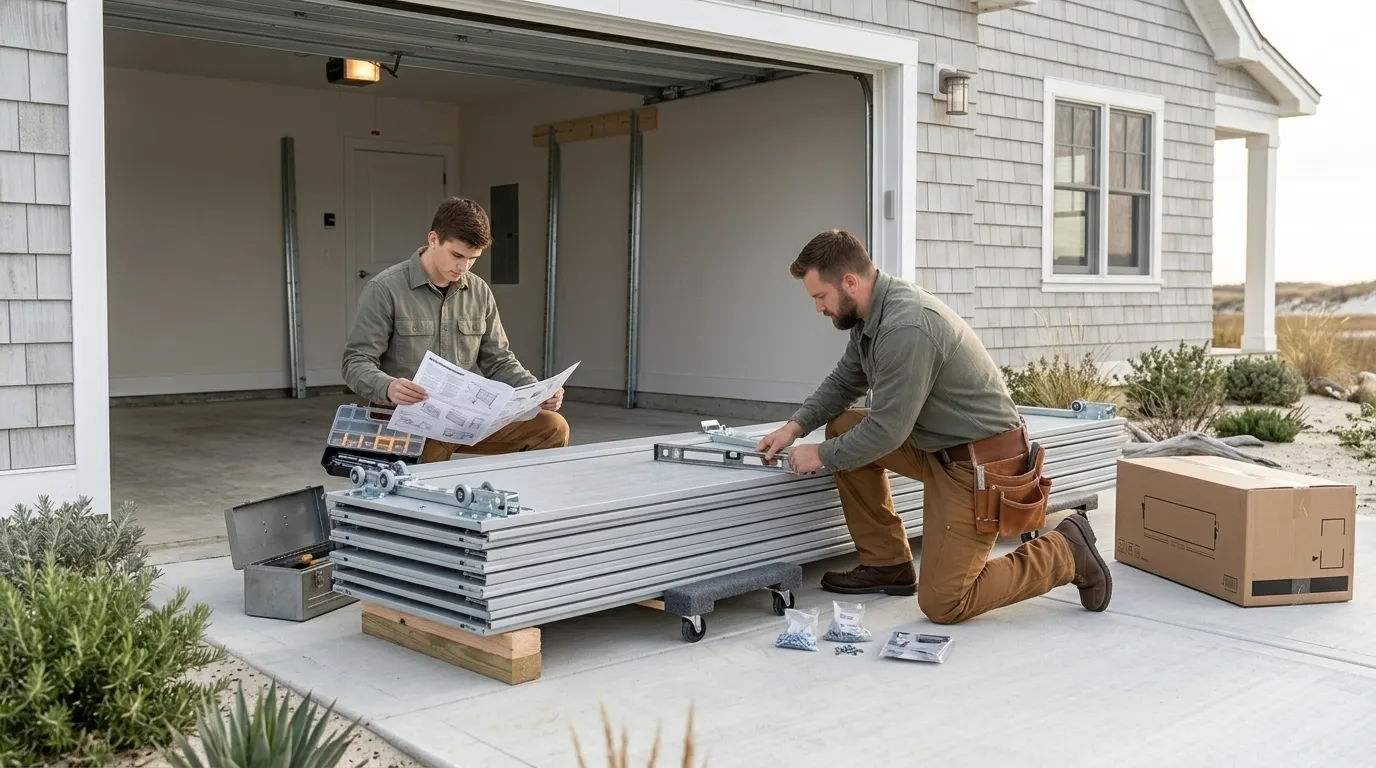
Garage Door Installation
New sectional doors sized and installed for the housing stock actually built in this area.
Learn more →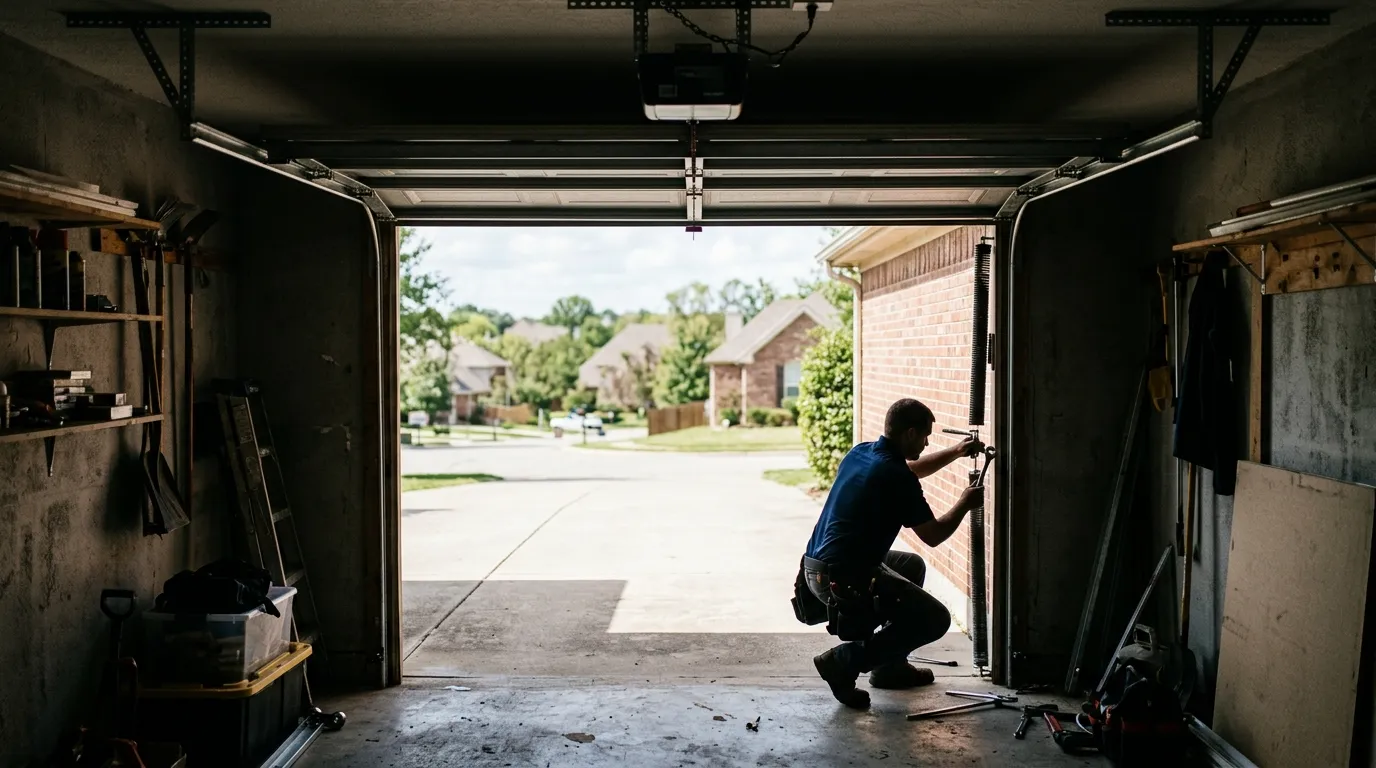
Garage Door Service
Tune-ups, lubrication, and safety checks that catch a small problem before it becomes a service call.
Learn more →Frequently Asked Questions
Why does my garage door feel heavier in the morning?
In a cold-severe climate like Hamilton's, overnight temperature drops stiffen the spring's lift and can slightly reduce its tension until things warm up. If the door is noticeably harder to lift by hand at 6 a.m. than at 2 p.m., that's a spring nearing the end of its life, not something wrong with the opener.
Is my house too old for a standard replacement door?
No. Houses across this area were built anywhere from 1938 to 2004, and standard replacement doors and openers fit nearly all of that range. The bigger factor is track and header clearance, which a tech checks in person rather than guessing from the build year alone.
Do you serve areas outside Hamilton itself?
We work across the wider service area, including places like Fairfield, Seven Mile, Pleasant Run, and Ross. If you're unsure whether your address is in range, ask when you call - we'd rather tell you plainly than waste your time.
Can I just replace the opener instead of the spring?
If the spring has lost tension, a new opener will strain against the same imbalance and burn out faster. We check spring balance before recommending an opener swap, since replacing the wrong part just delays the real repair and costs you twice.
Have a Door That Needs a Second Opinion?
Call and describe what it is doing - we will tell you what it likely is.