
Hamilton Garage Door Guide
Wind and the Wide Door: A Hamilton Homeowner's Guide
Hamilton's older two-car garages carry wide doors on original 1960s-70s hardware. Here's what wind does to them, what to check, and what a fix actually runs.
What You Pay
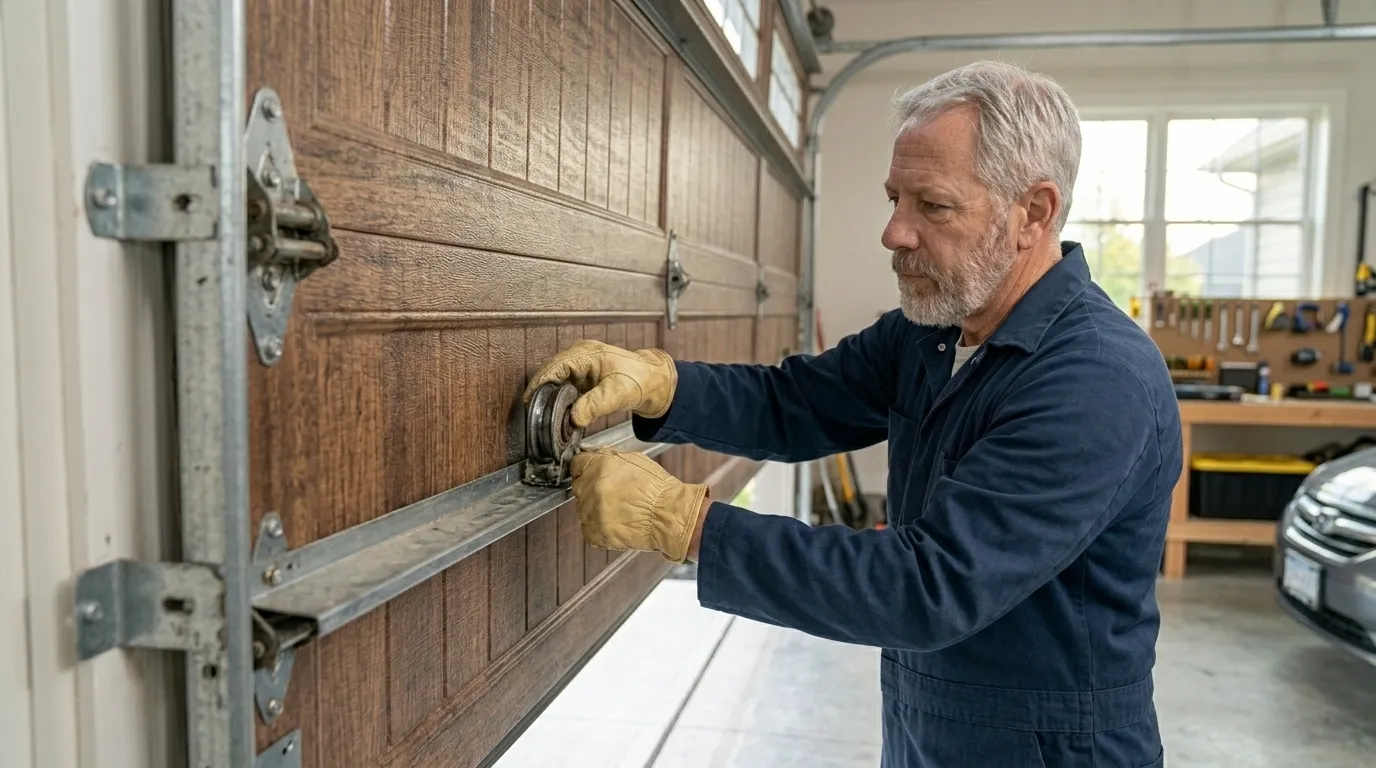
There's no single number here, and anyone who quotes you one before looking at the door is guessing. What you pay depends on whether the door just needs a reinforcement strut kit bolted across the top few panels, or whether the track itself has been pulled off its plumb line by repeated flex. A strut kit is the cheaper fix and it's often enough on a door that's only started to bow in the middle.
A bent track, bowed panels, or a stripped opener bracket is a different job, and on some doors the honest answer is that patching it costs close to what a new door section would run, so it isn't worth doing. With a median household income of $77,312 across the area, most owners here can cover a strut kit without much strain, but a full door swap is the kind of expense worth getting looked at in person before you commit. We don't give phone quotes for wind damage; we need to see how far the top panel has pulled from the track.
If your door is original to a house built in the 1960s or 70s, factor that into the conversation too - parts for some of those older track systems are getting harder to source, which can push a repair toward replacement even when the damage looks minor.

The Problem
Most of the wide two-car doors on this side of town went up on houses built between 1938 and 2004, with the bulk from the 1960s and 70s, when a 16-foot door often got the same lightweight track hardware as a single 9-foot door. Nobody planned for that mismatch to matter - it didn't, for decades, on a door that mostly sat still.
But a 16-foot panel has roughly twice the surface area of a single door, and wind doesn't push evenly across it. It grabs the middle first, where the panel has the least support between the side tracks, and it works that middle section back and forth every time a gust hits and lets go.
Hamilton sits in a cold-severe climate band, and the wind that arrives ahead of a winter front carries more sustained push than a summer squall - it's the kind of wind that leans on a door for minutes at a time rather than gusting once and moving on. On a wide door with thin original track, that sustained push is what bows the top panel outward, pulls hinges loose from their screws, and eventually walks the rollers right out of the track. You'll usually see it first as a gap of daylight along one top corner, or a door that shudders audibly when the wind picks up.
Checking It Yourself
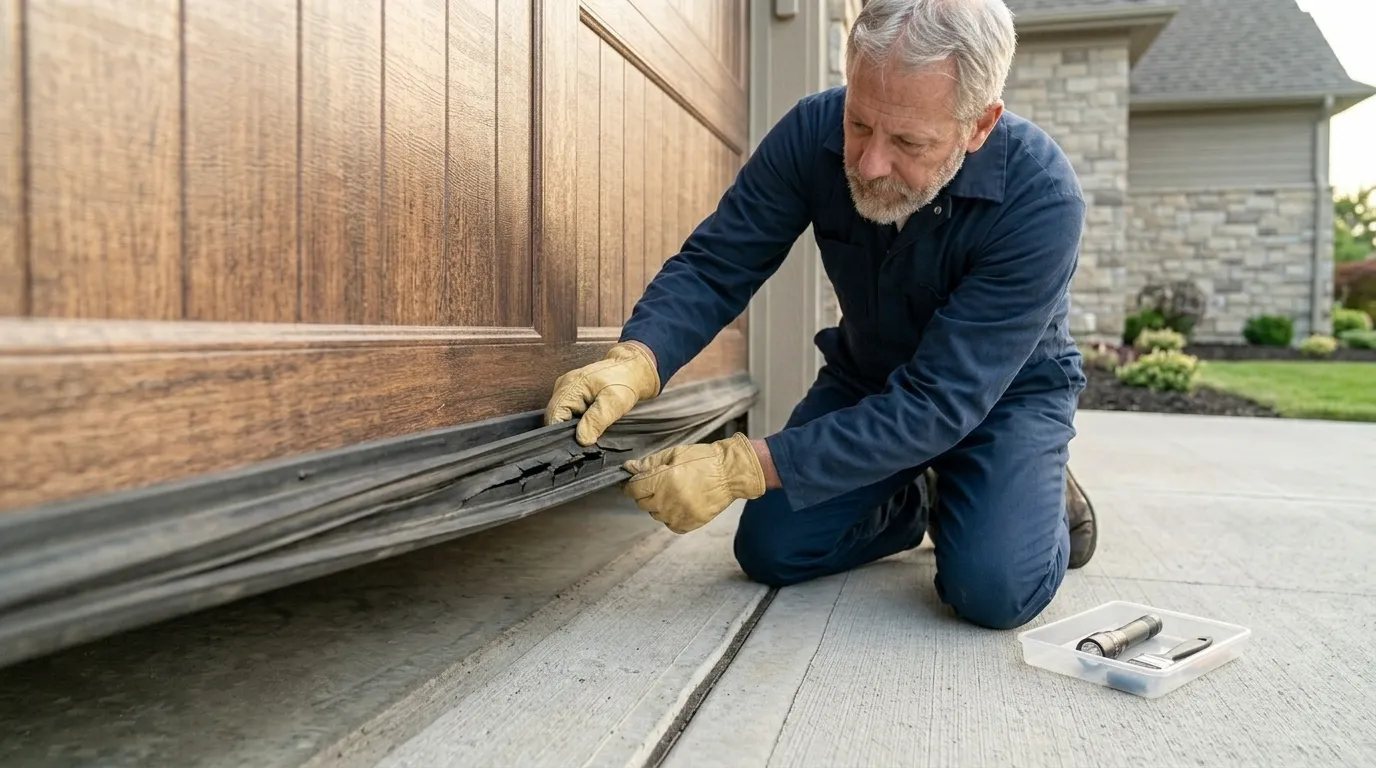
Stand inside the garage with the door down and look along the top panel from one side to the other. On a wide door, sight down the seam where the top panel meets the second - if you see the middle of that seam sitting even slightly proud of the two ends, the panel is already flexing more than it should under normal wind, not just today's wind.
Next, check the track brackets, especially the ones nearest the top corners. On houses built in the 1960s or 70s, these are often the original lag screws into original framing, and decades of vibration loosen them slowly. If you can wiggle a bracket by hand, that's a fastener you can usually tighten yourself with a socket wrench - not a job that needs a call.
Last, run the door up and down once and listen. A wide door that's taken sustained wind load will often develop a faint scrape or a hitch partway up, where a roller has been pulled slightly out of true.
That's worth noting even if the door still opens fine, because it tends to get worse, not better, on its own. If you see a panel that's visibly bowed rather than just flexing, stop opening and closing it and get it looked at - a bowed panel under continued cycling can crack.
What Local Conditions Do
With 101,416 owner-occupied houses across the service area, a lot of them built on the wider two-car footprint typical of 1960s and 70s tract construction, that thin original track on a 16-foot door is common here, not rare. It's not a defect specific to one builder or one street - it's what got installed across whole blocks in the same few years, which means if your neighbor's door has started bowing, yours is worth checking too.
If you're out toward Fairfield, Seven Mile, or Pleasant Run, the same 1960s and 70s stock repeats house after house, and the wide door on the two-car garage is almost always the one with sagging middle panels, not the single-car door next to it. The cold-severe climate here means that wind problem shows up alongside another one: cold makes steel track brittle and lubricant thick, so a bracket that's already loose from wind flex is more likely to crack rather than just bend when a hard winter gust hits it. That combination - wide door, older hardware, cold-heavy wind - is the specific reason this is a recurring call here rather than a once-in-a-while one.
How We Can Help
Garage Door Repair
Springs, cables, tracks, rollers, and openers fixed by a tech who explains the problem before touching anything.
Learn more →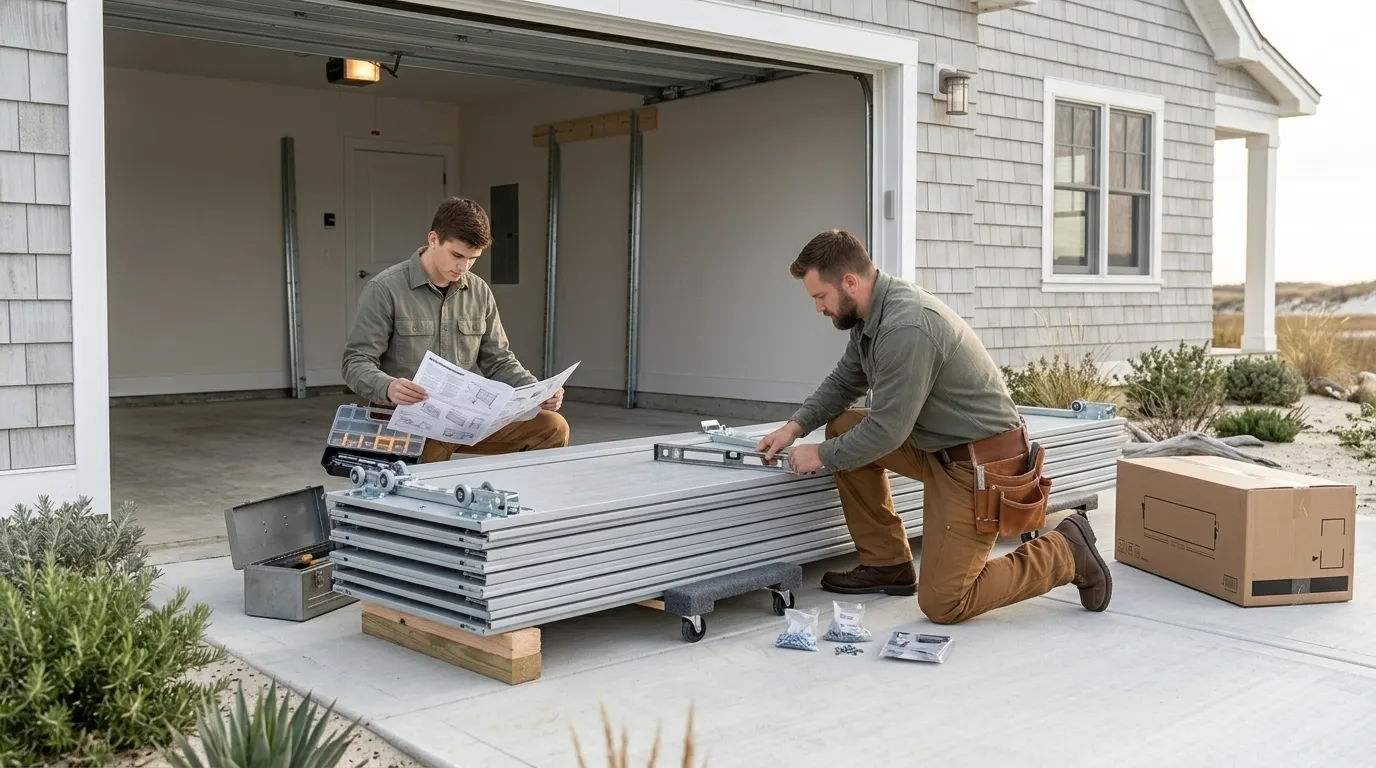
Garage Door Installation
New sectional doors sized and installed for the housing stock actually built in this area.
Learn more →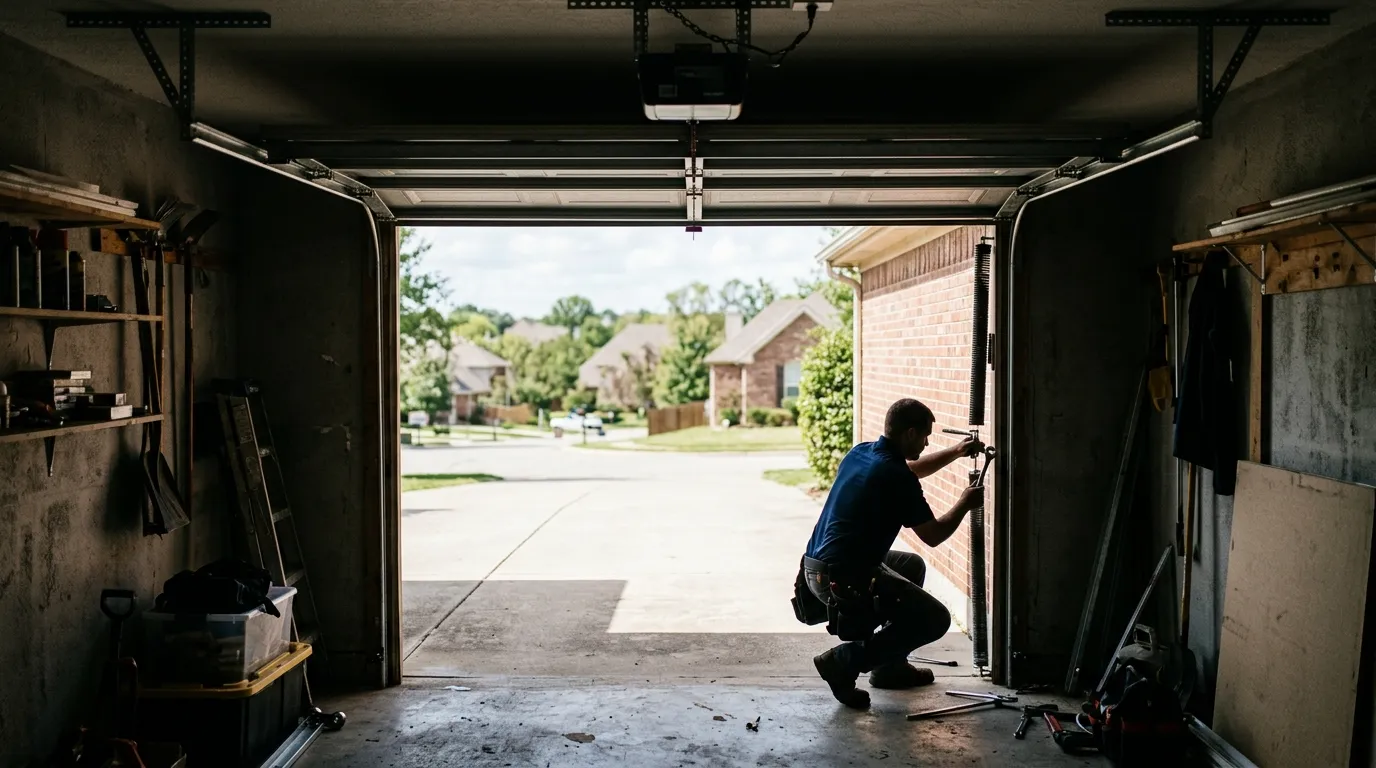
Garage Door Service
Tune-ups, lubrication, and safety checks that catch a small problem before it becomes a service call.
Learn more →Frequently Asked Questions
Why does only my wide double door flex in the wind, not the single door next to it?
Surface area. A 16-foot door catches roughly twice the wind load of a single 9-foot door, and on houses from the 1960s and 70s that wide door often has the same gauge track and hardware as the narrow one next to it, which was never built to carry that extra push.
Can I just add a strut kit myself?
You can install one, but if the track is already bent or a panel is visibly bowed, a strut kit won't fix the underlying problem and can mask damage that gets worse. Check the track alignment first - if it's straight, a strut kit is a reasonable DIY step.
Is this a wind problem or an age problem?
Both, together. The wind is the same in every part of town, but a door on original 1960s or 70s track hardware flexes more under that wind than a newer door with reinforced panels does. Age is what turns ordinary wind into a repeated stress on the same weak point.
Have a Door That Needs a Second Opinion?
Call and describe what it is doing - we will tell you what it likely is.